Interlink
Design Making, Material Exploration
2025
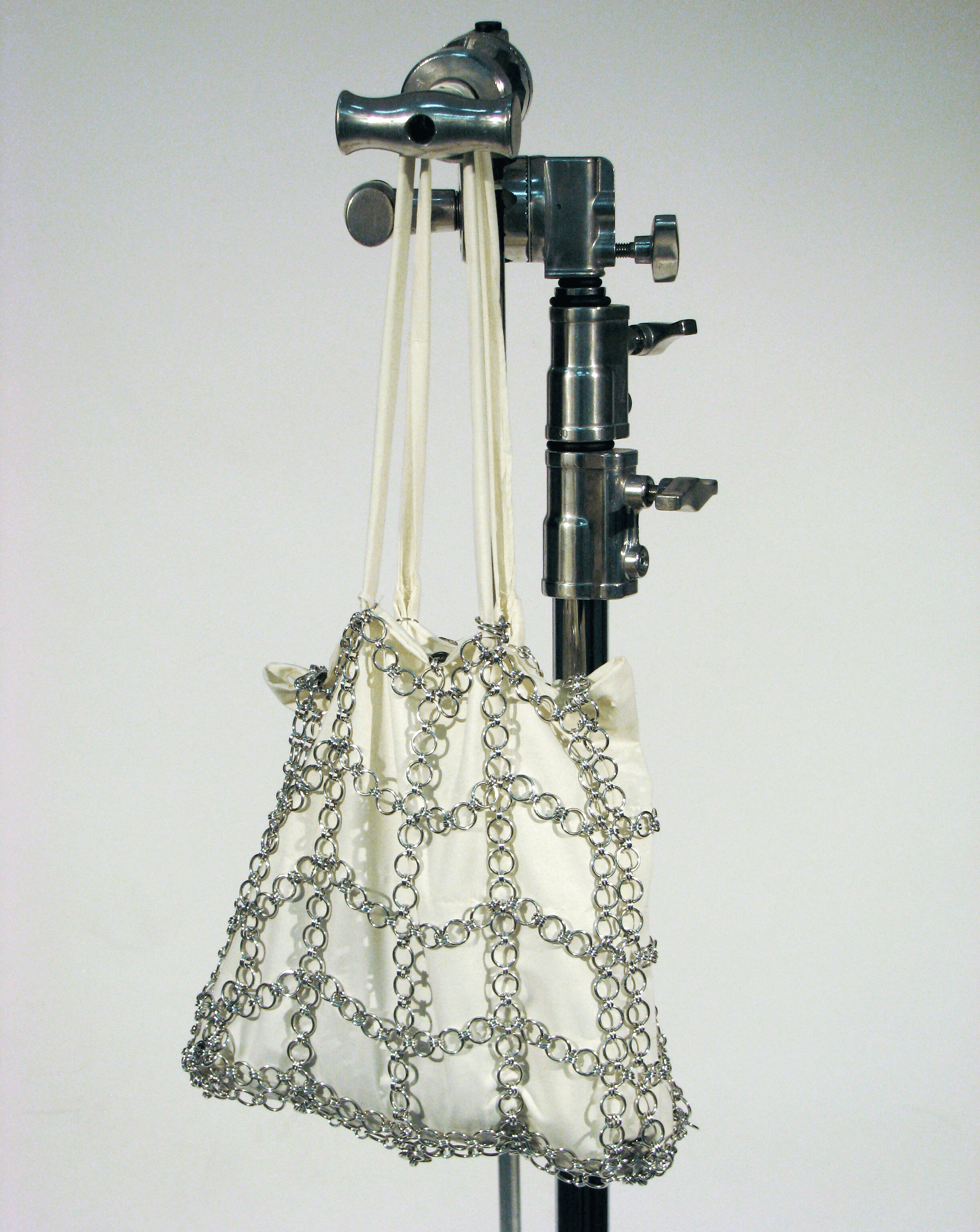
Design Through Making
This project explores material intelligence as something learned through our hands rather than extensive research. By making a series of chainmail objects, I explored how rigid components can come together to form flexible structures, and how touch, repetition, error and adjustment can develop deep material understanding.
Historically associated with protection and warfare, chainmail is recontextualized within contemporary experimentation. Rather than prioritizing function, these objects hold value in their labor, process, and aesthetic presence. They exist as evidence of time, effort, and learned intuition; emphasizing how hands-on making carries knowledge that cannot be replicated through digital tools or abstract planning.
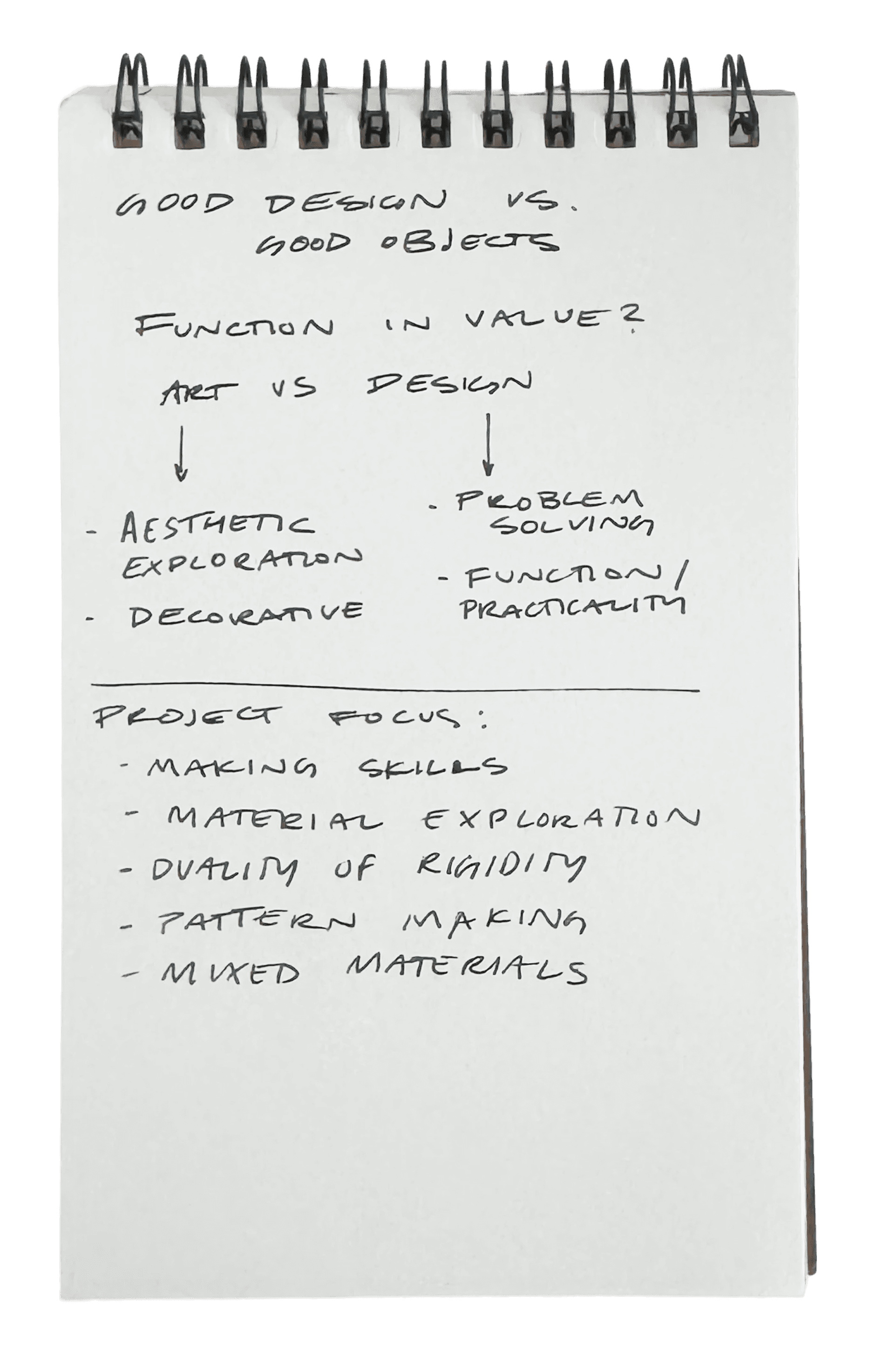
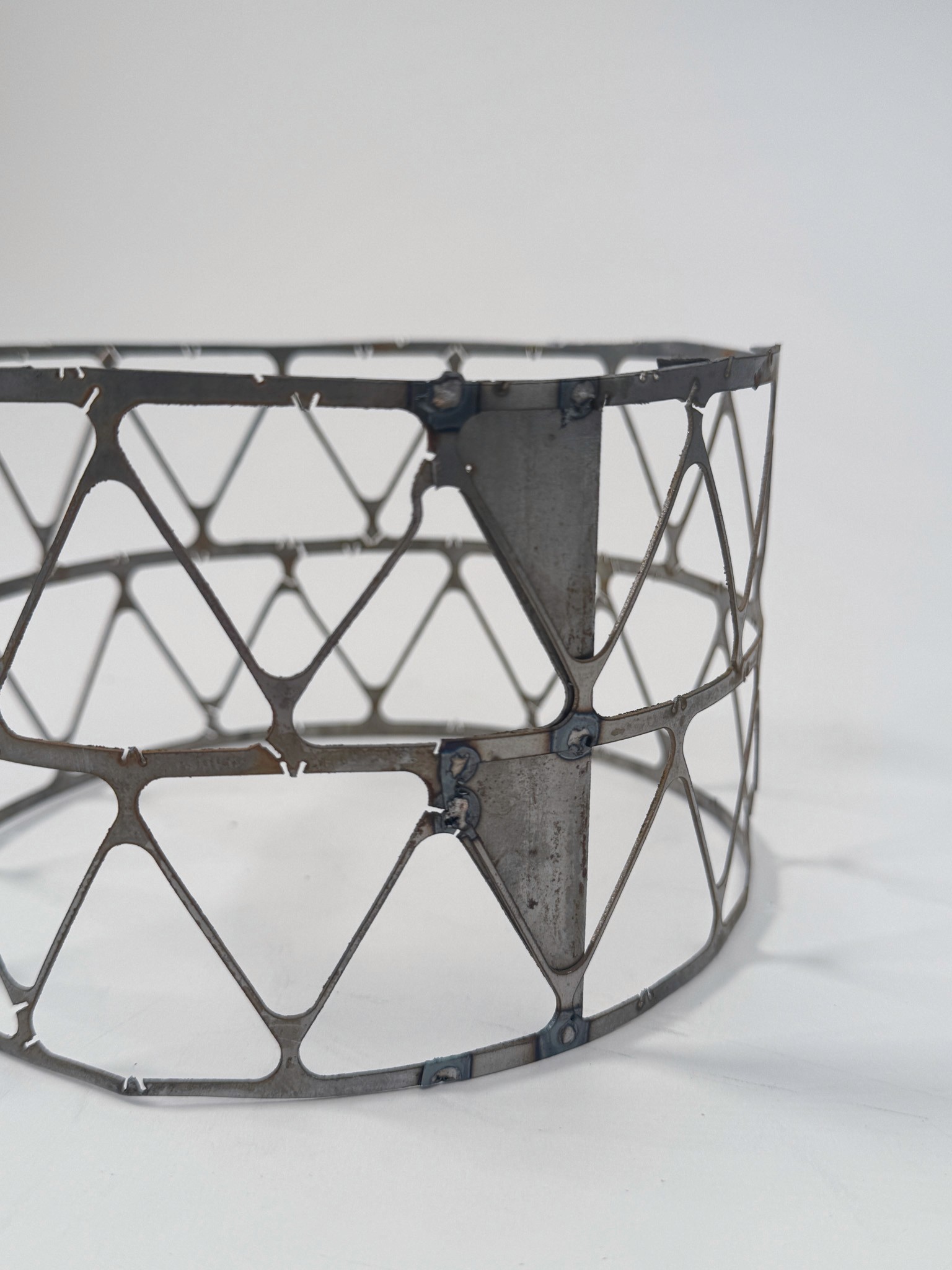
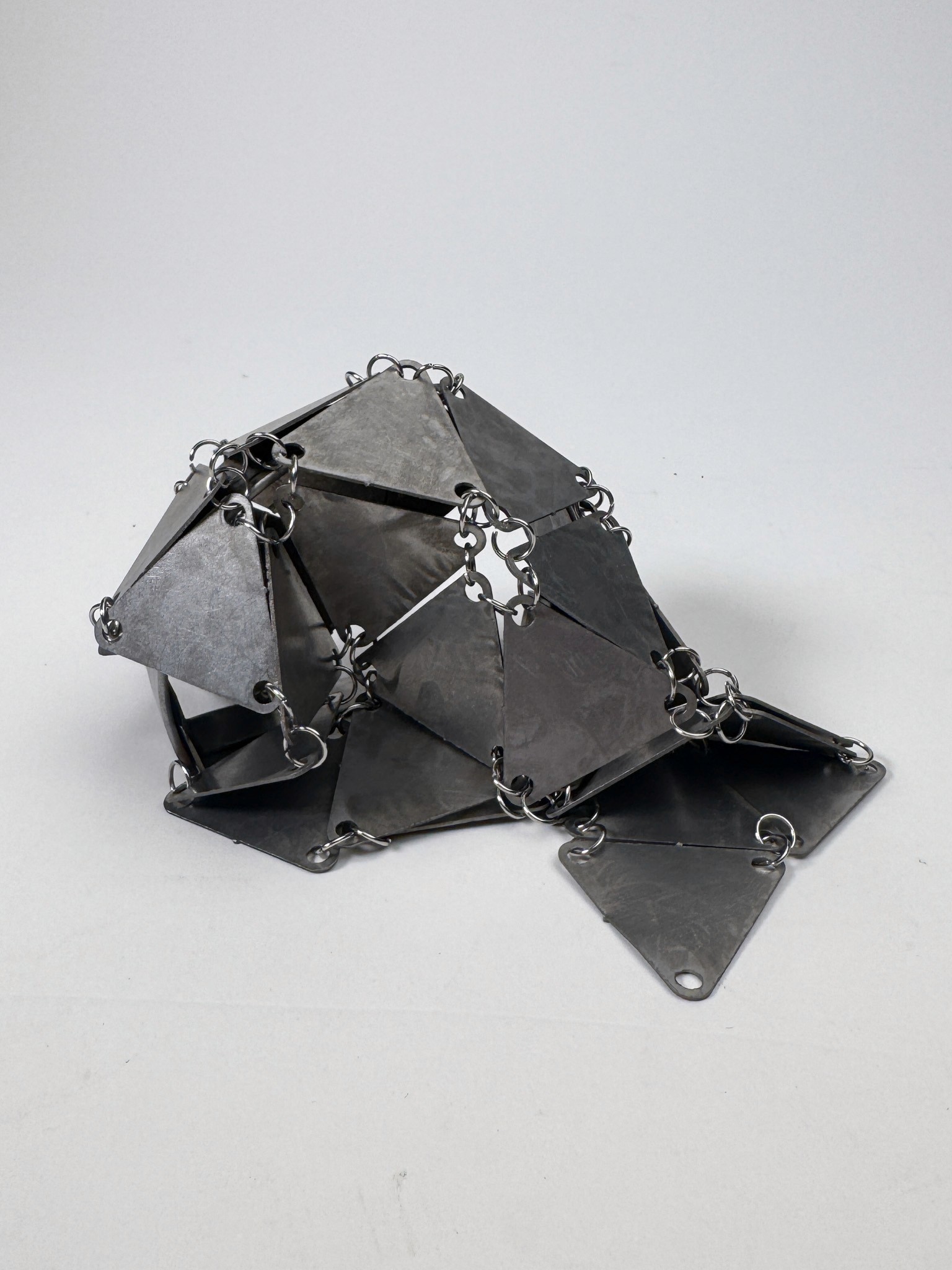
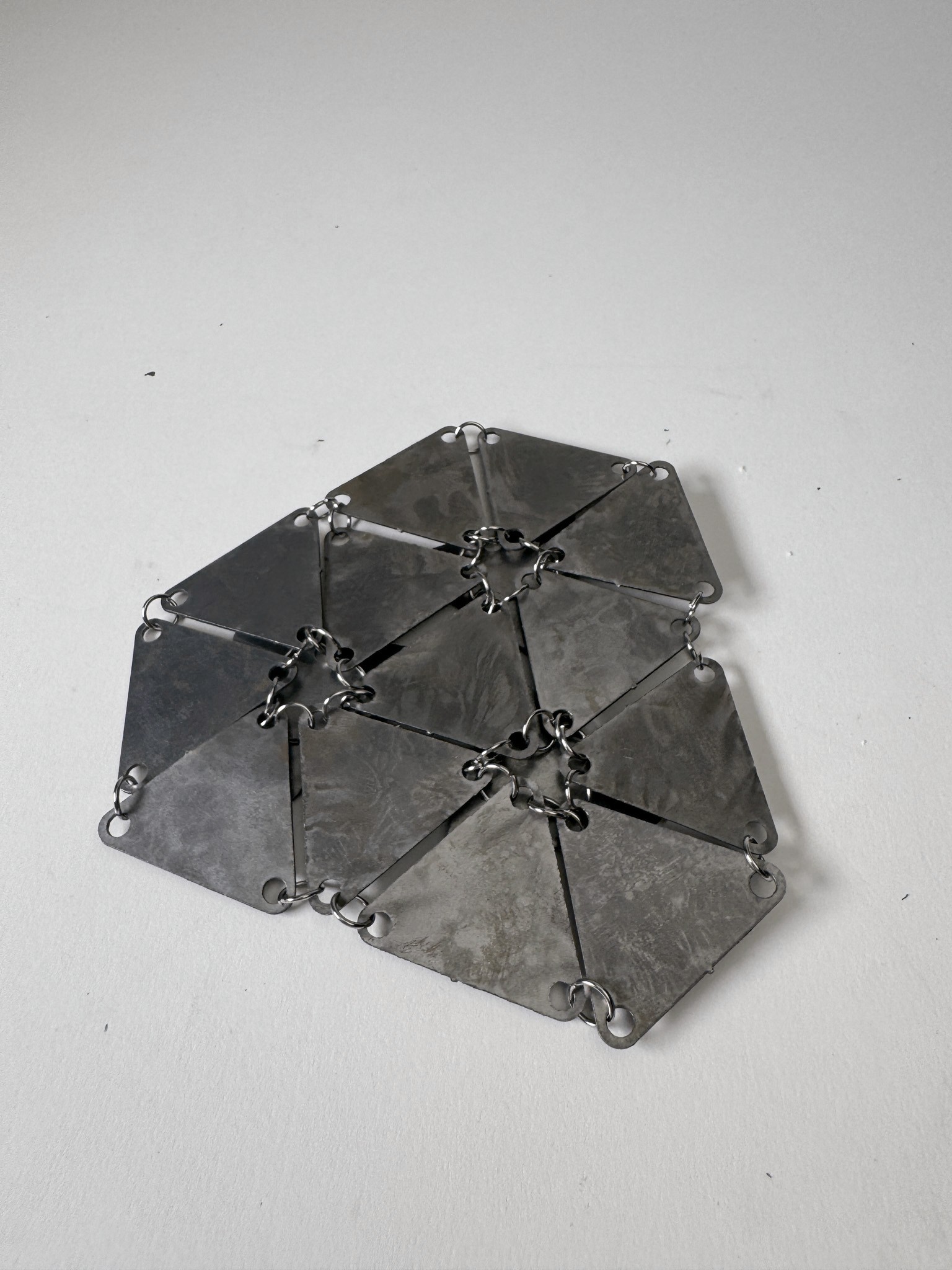
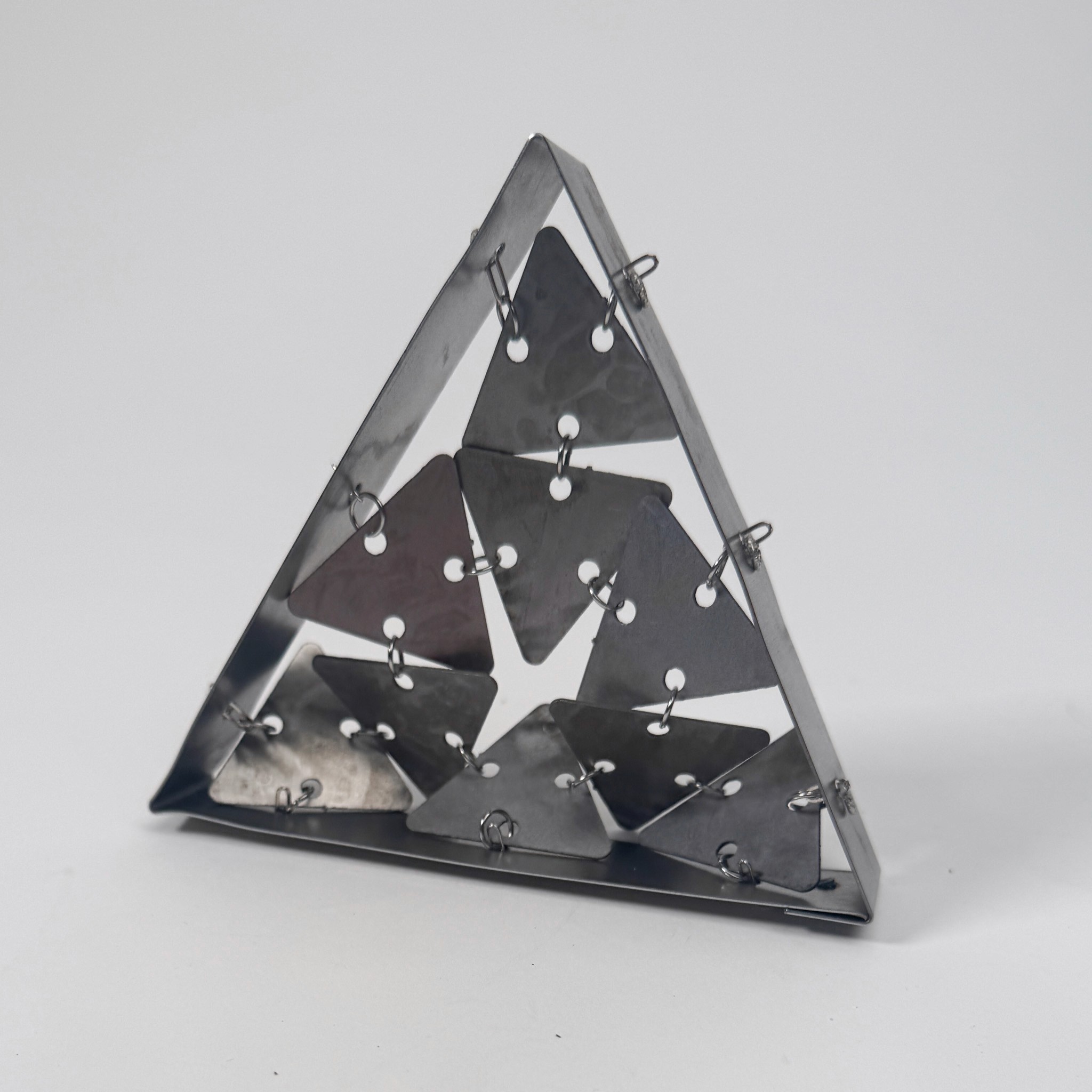
Initial Material Studies
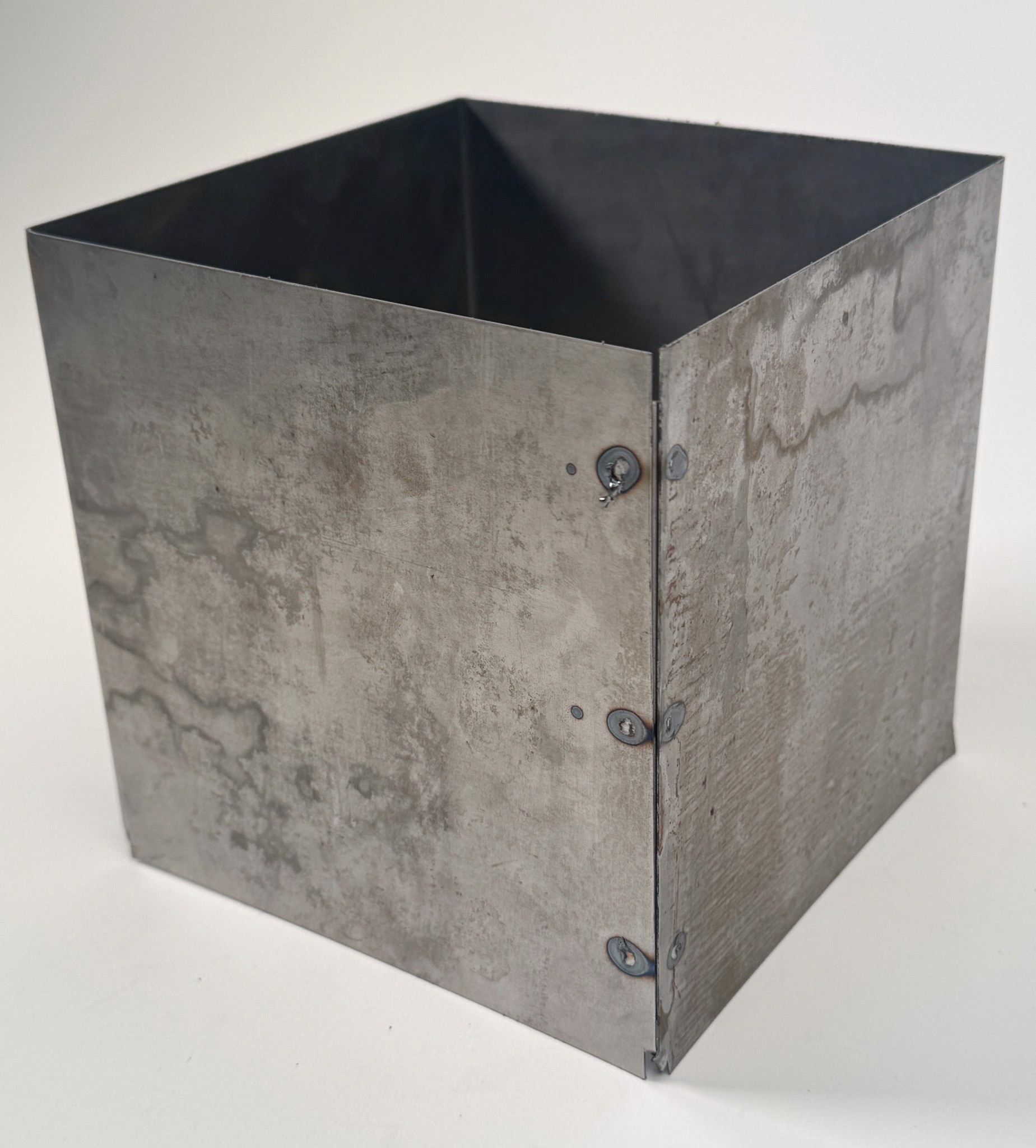
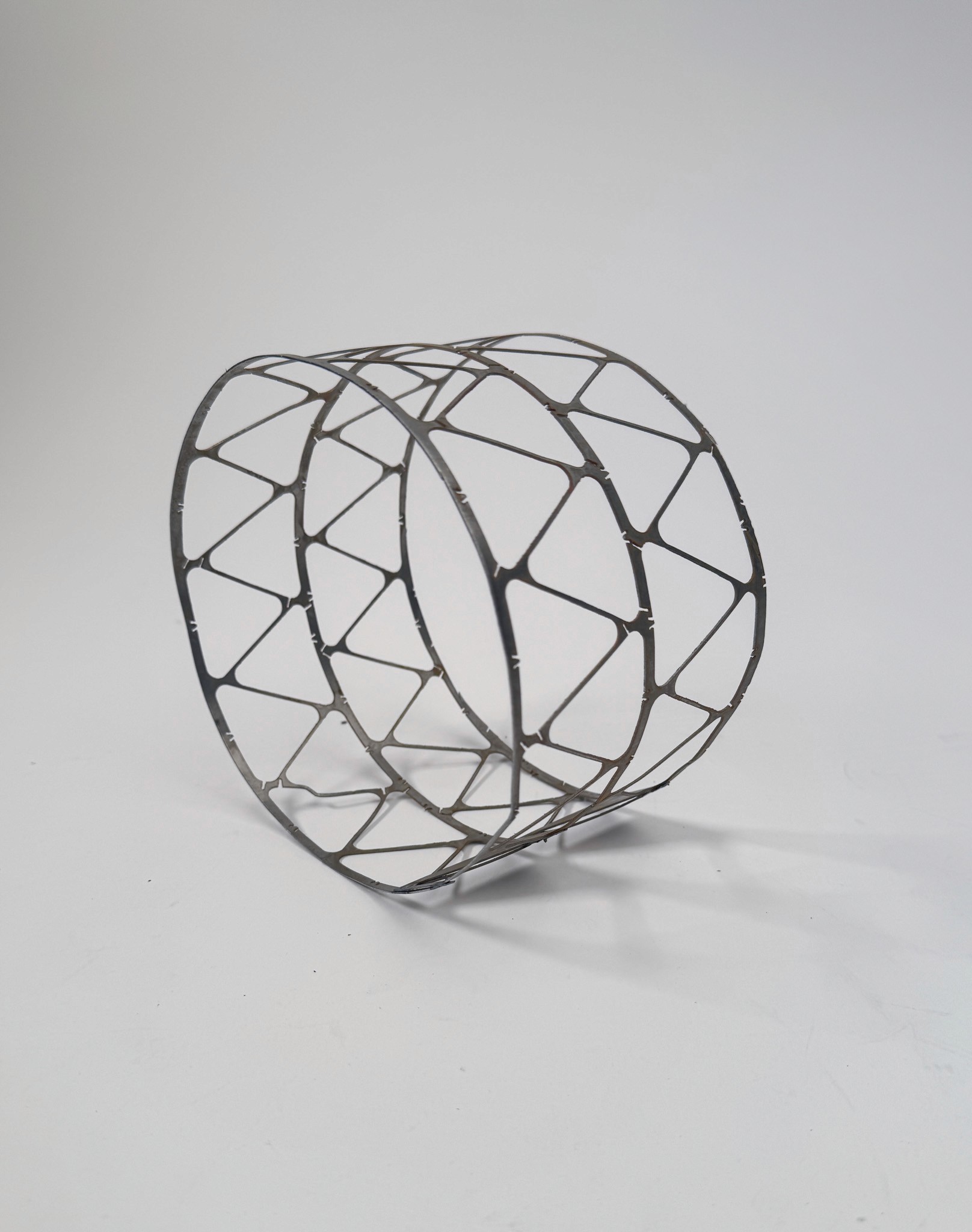
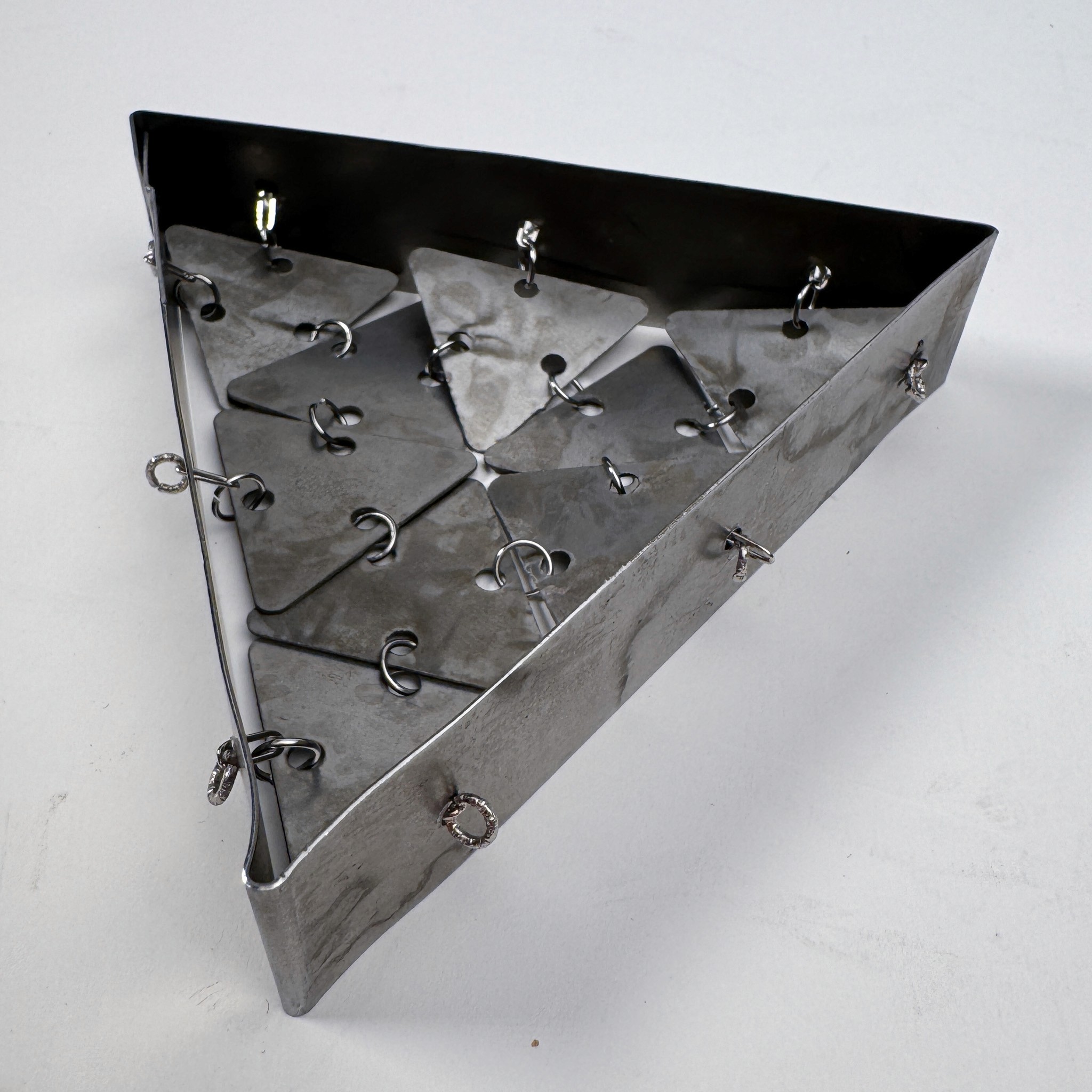
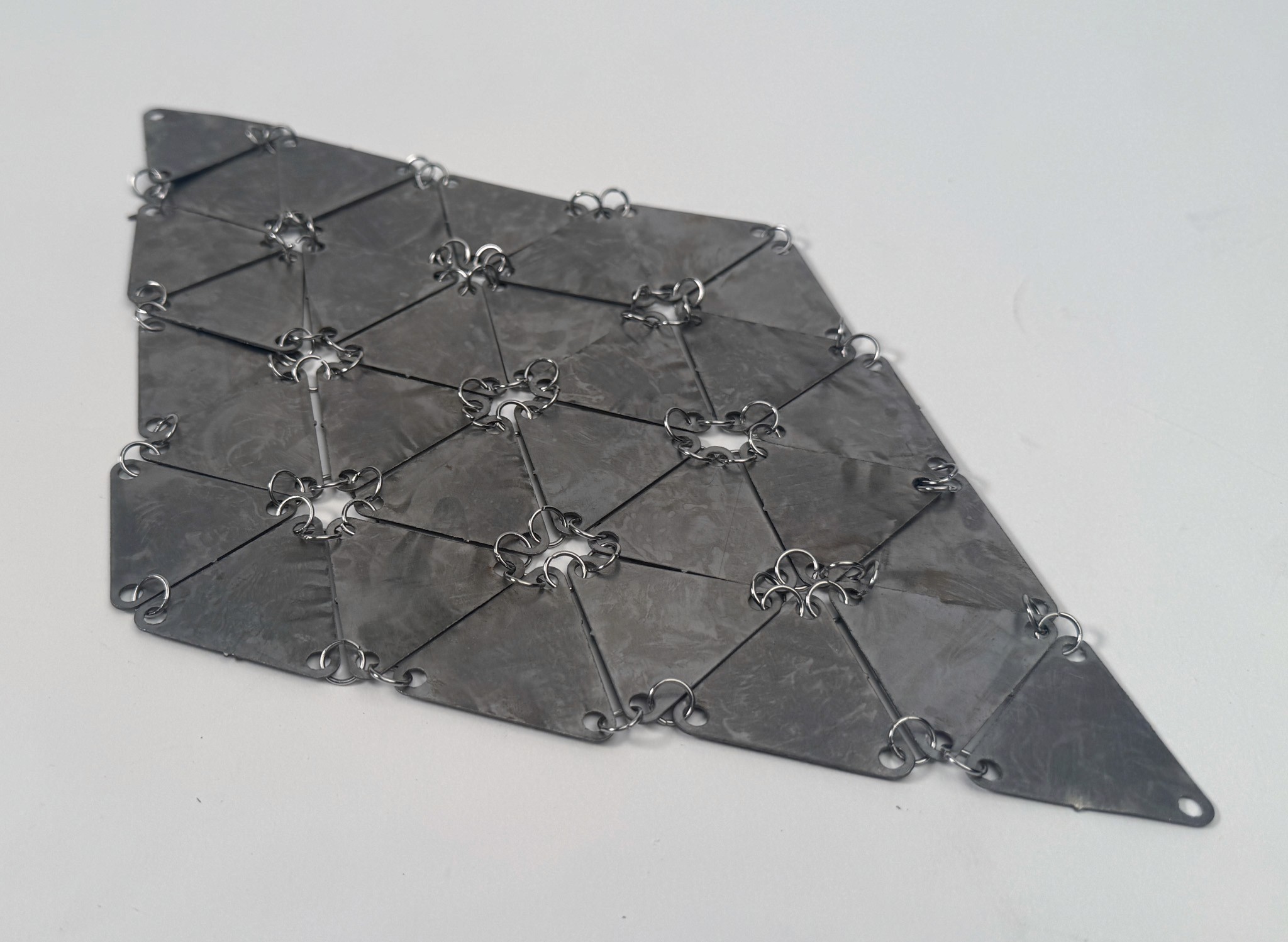
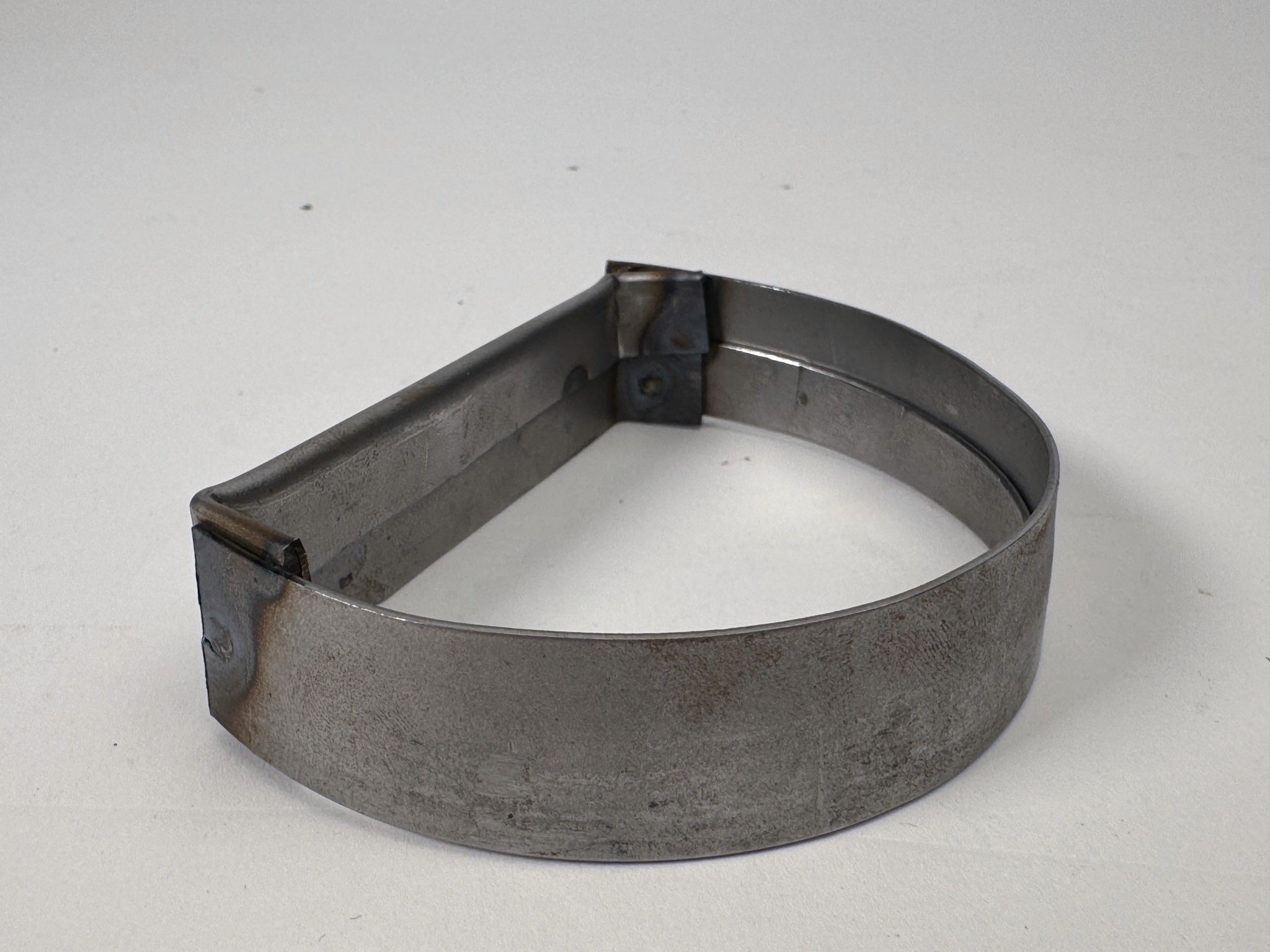
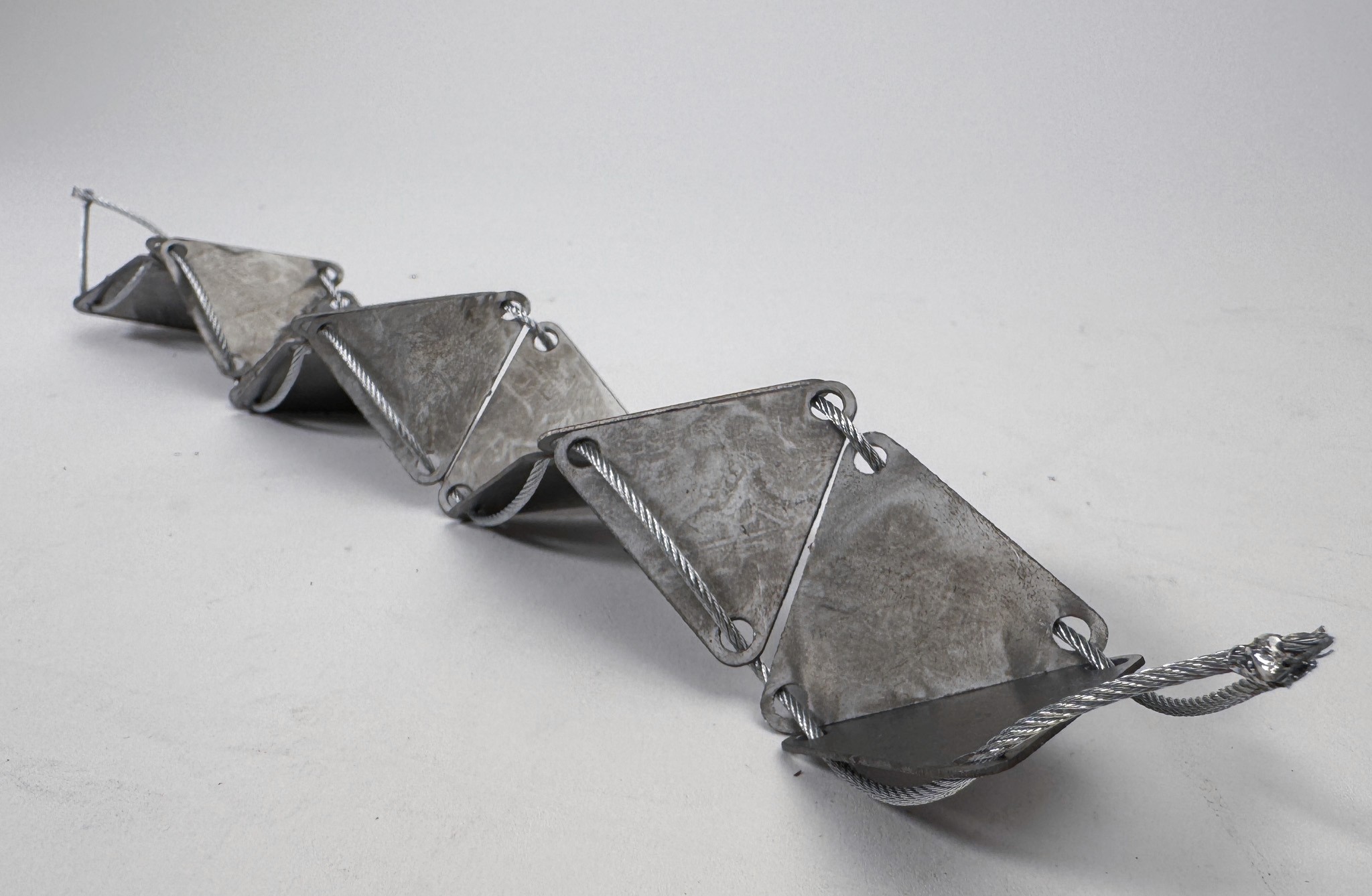
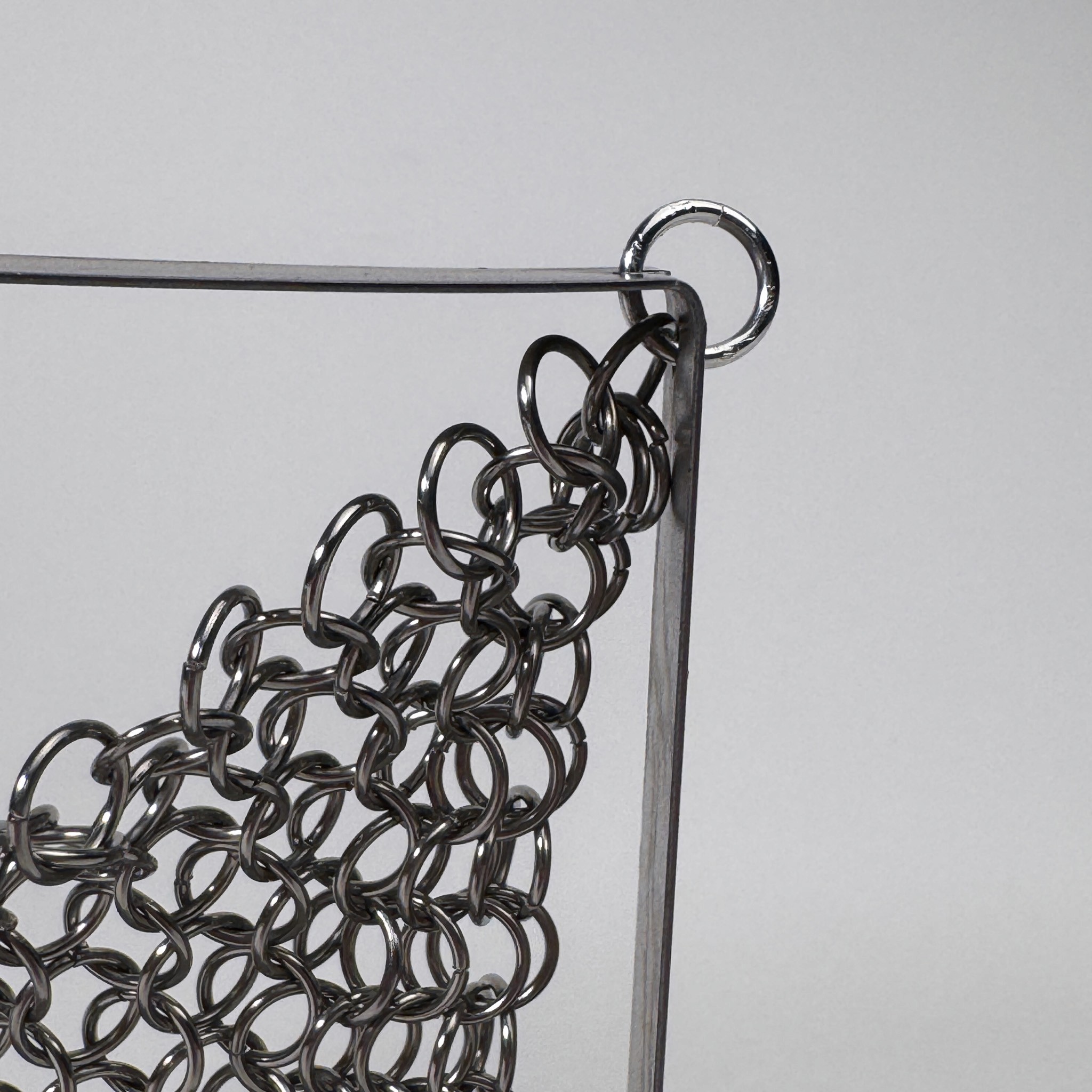
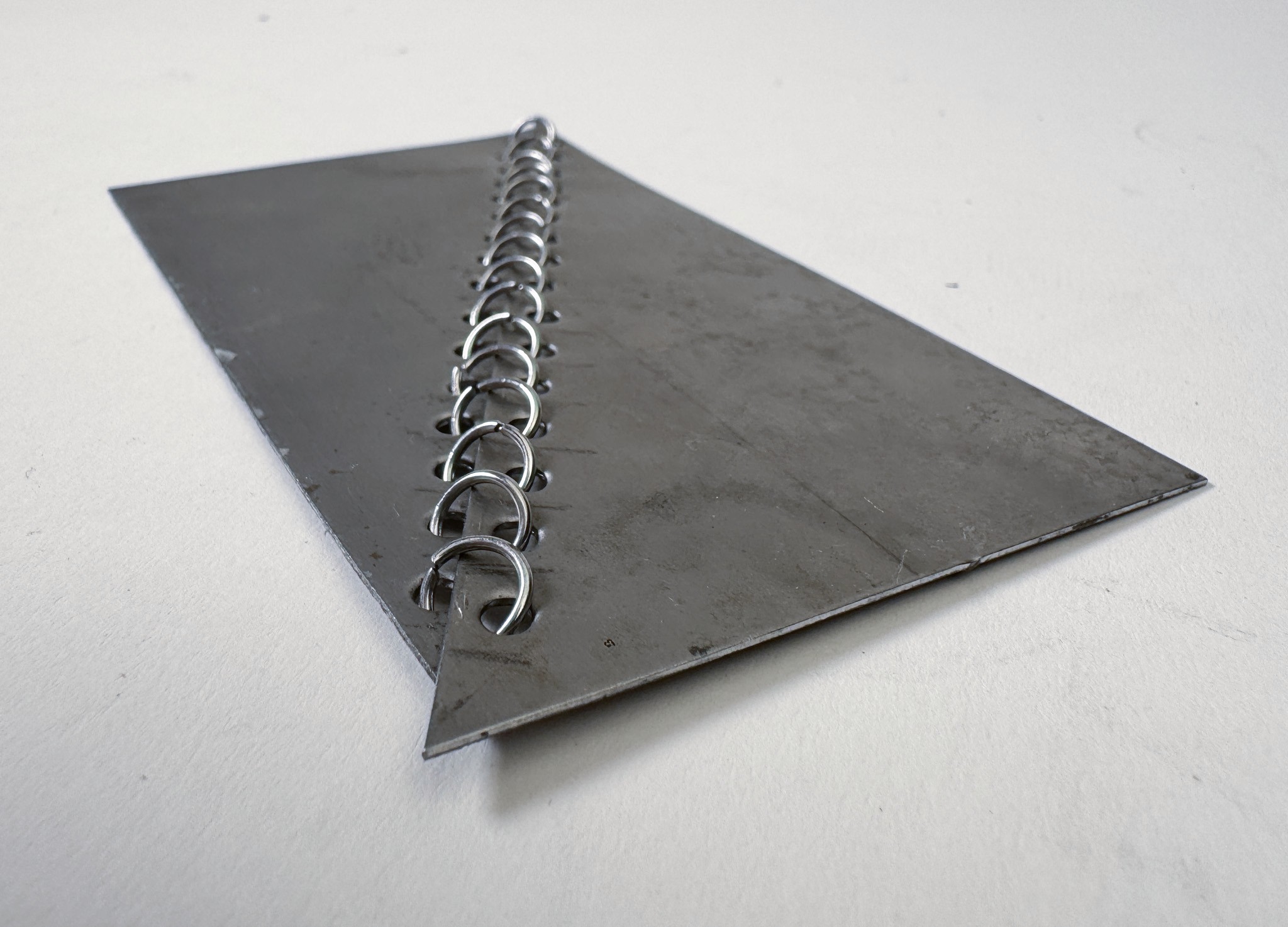
12 total sheet metal and chainmail material studies to gain experience and explore capabilities
Design Intentions

kinetic sculpture
Demonstrate chainmail in constant motion.
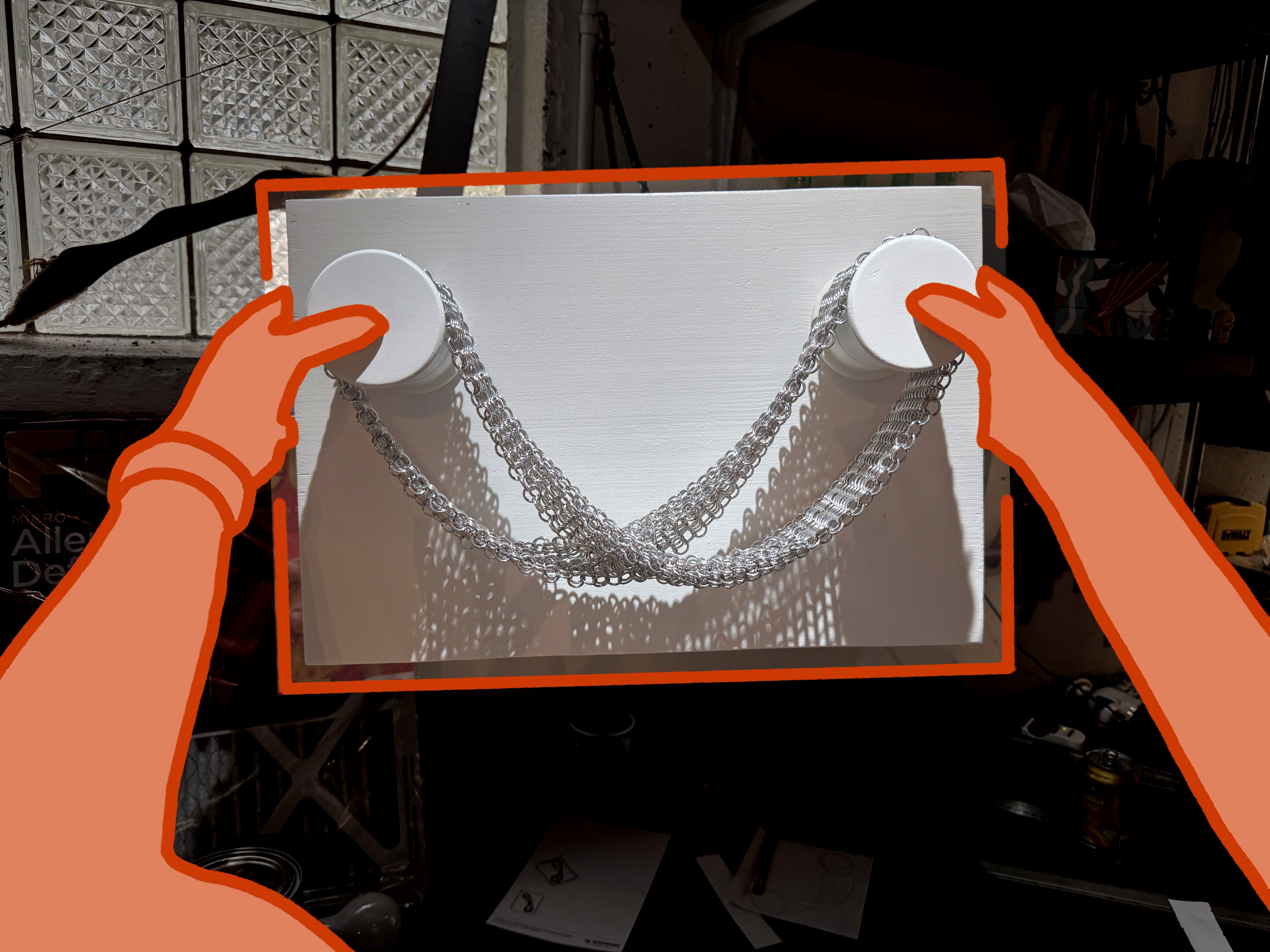
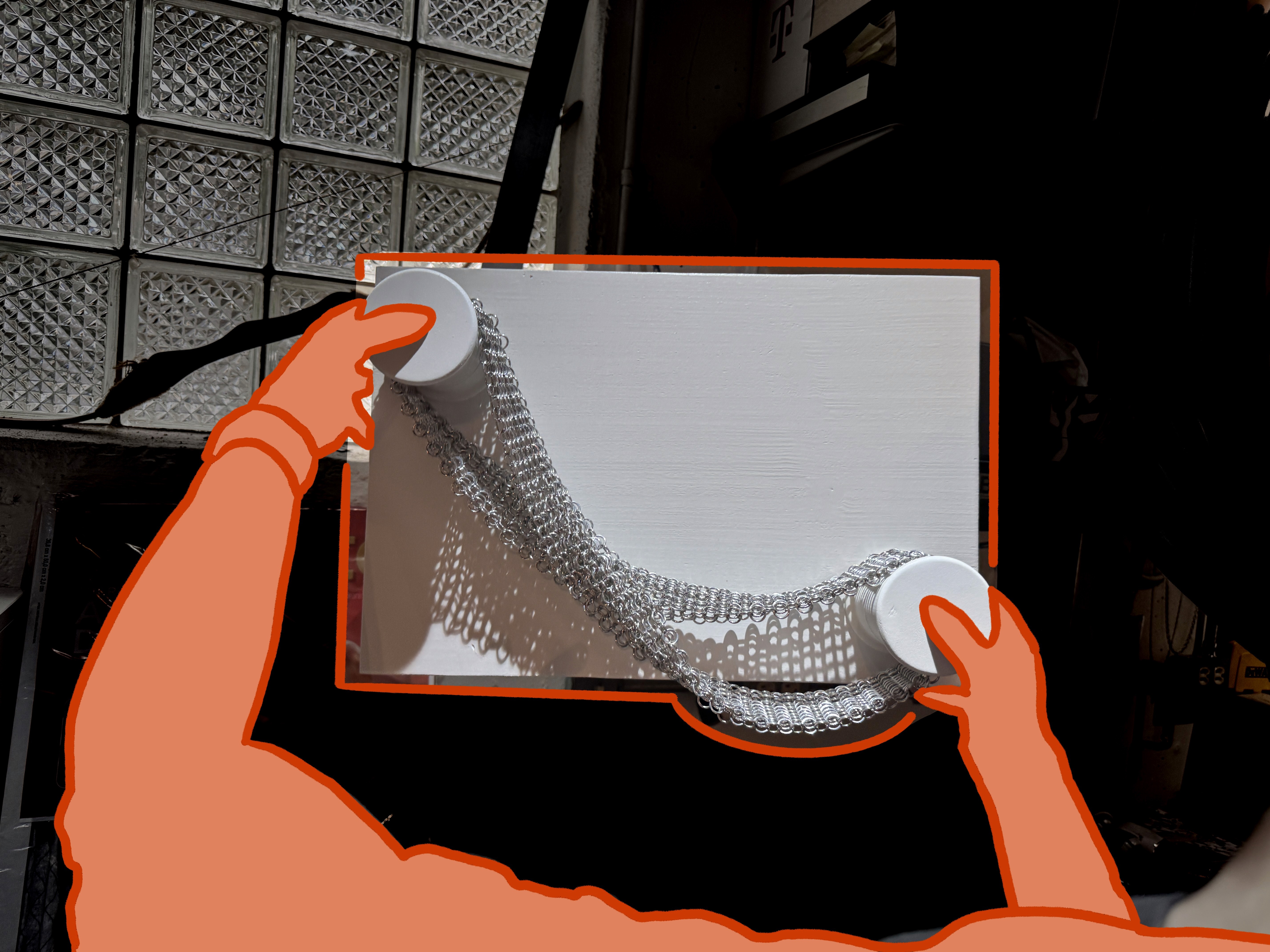
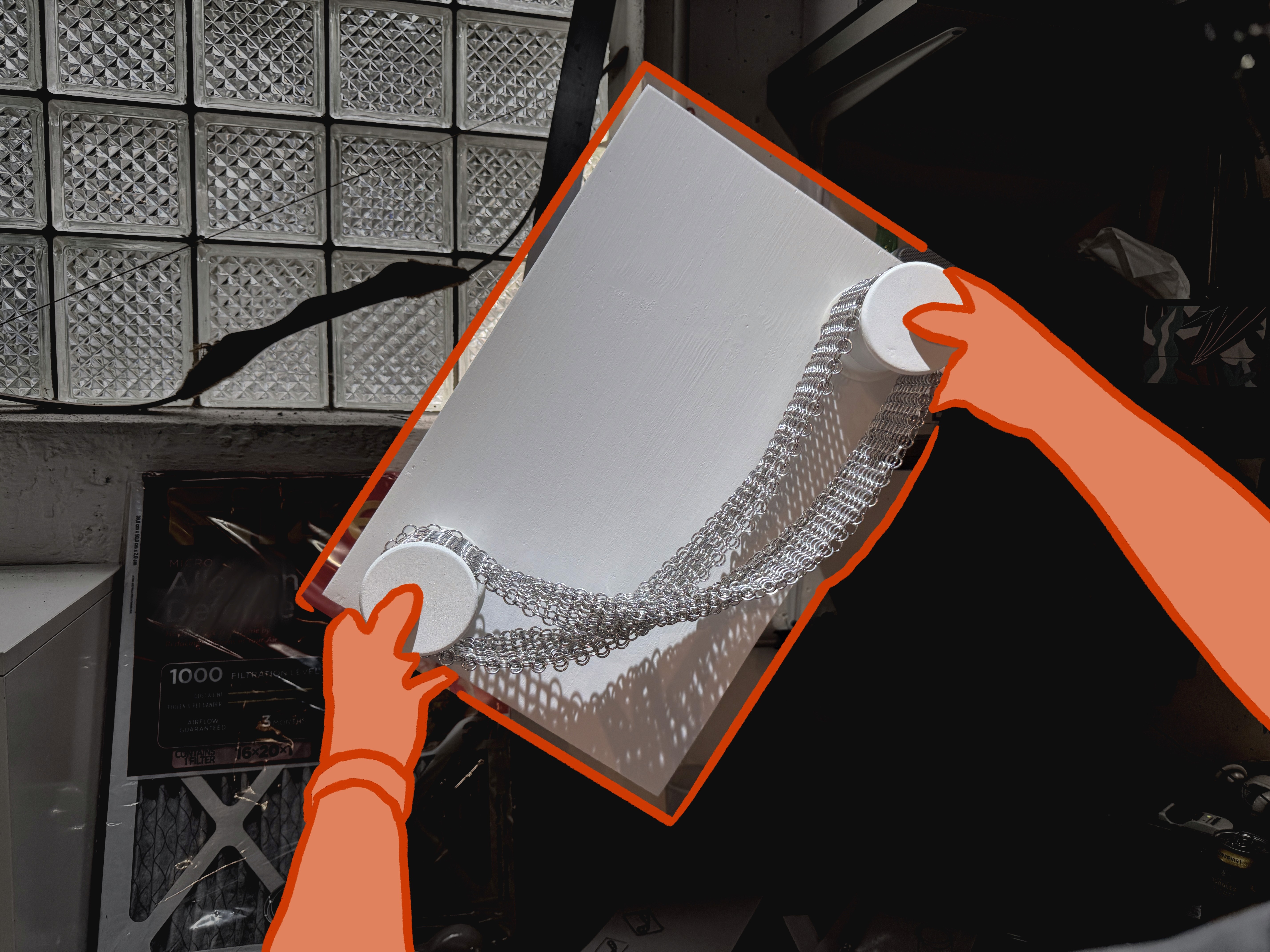
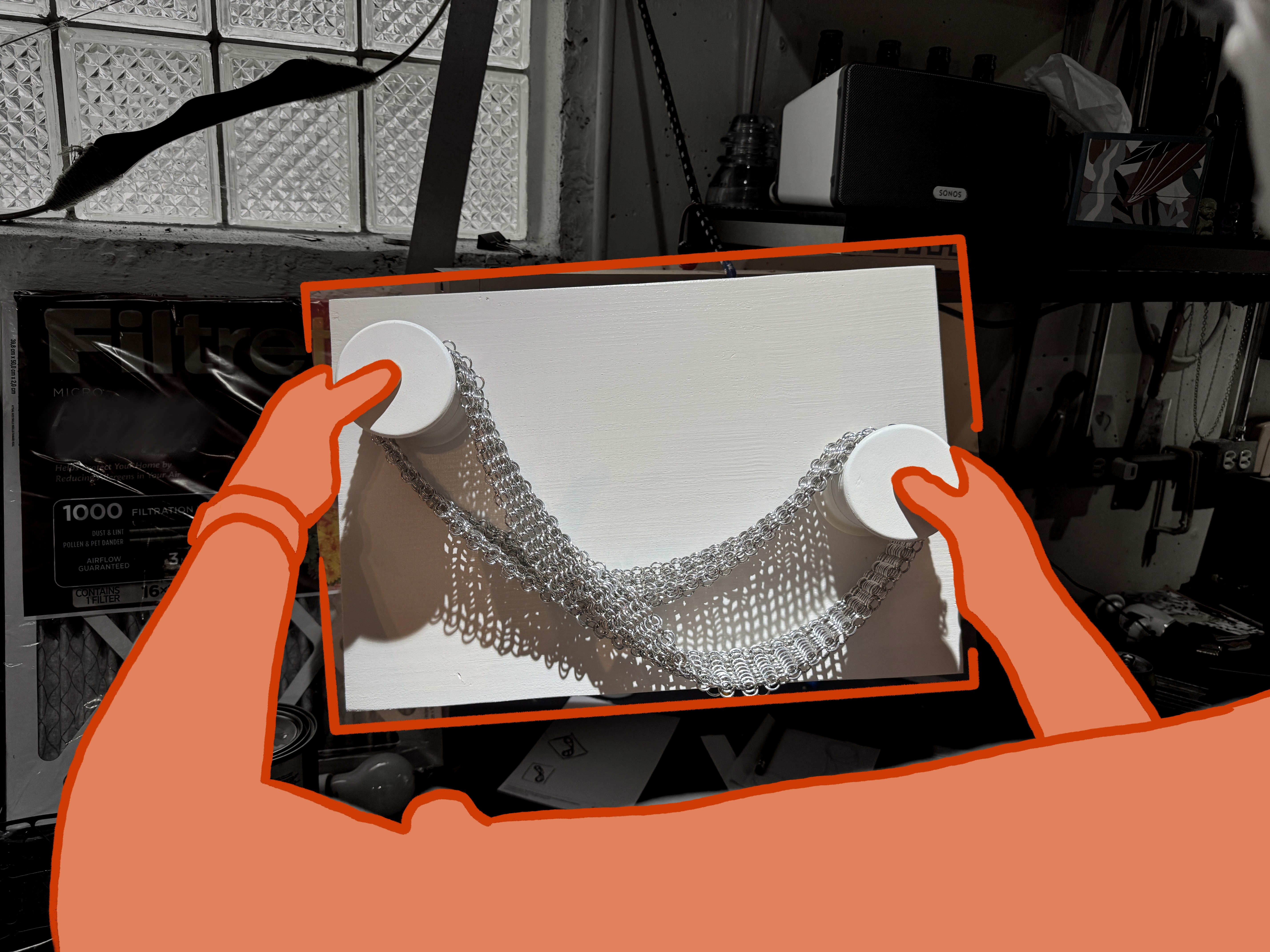
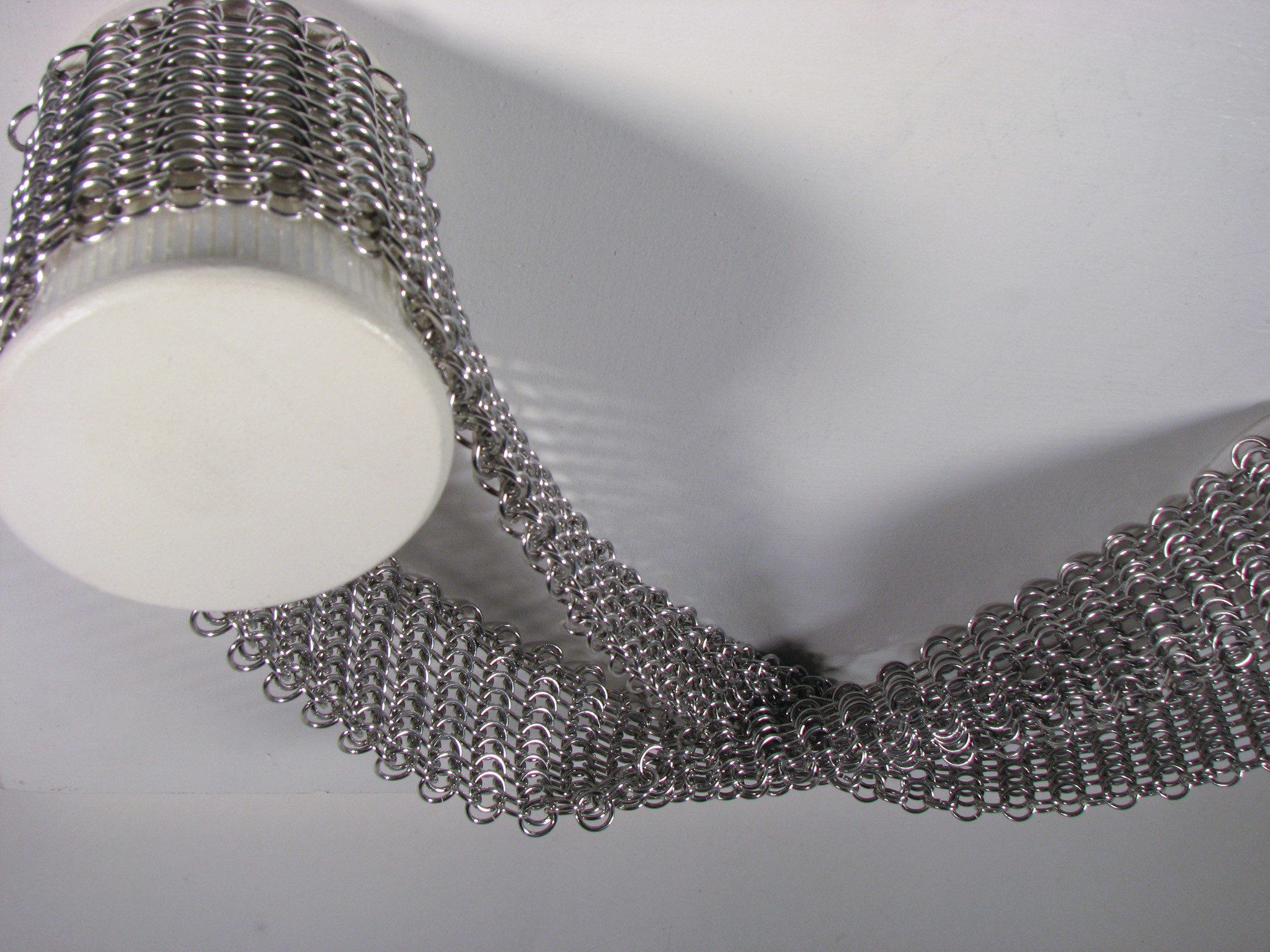
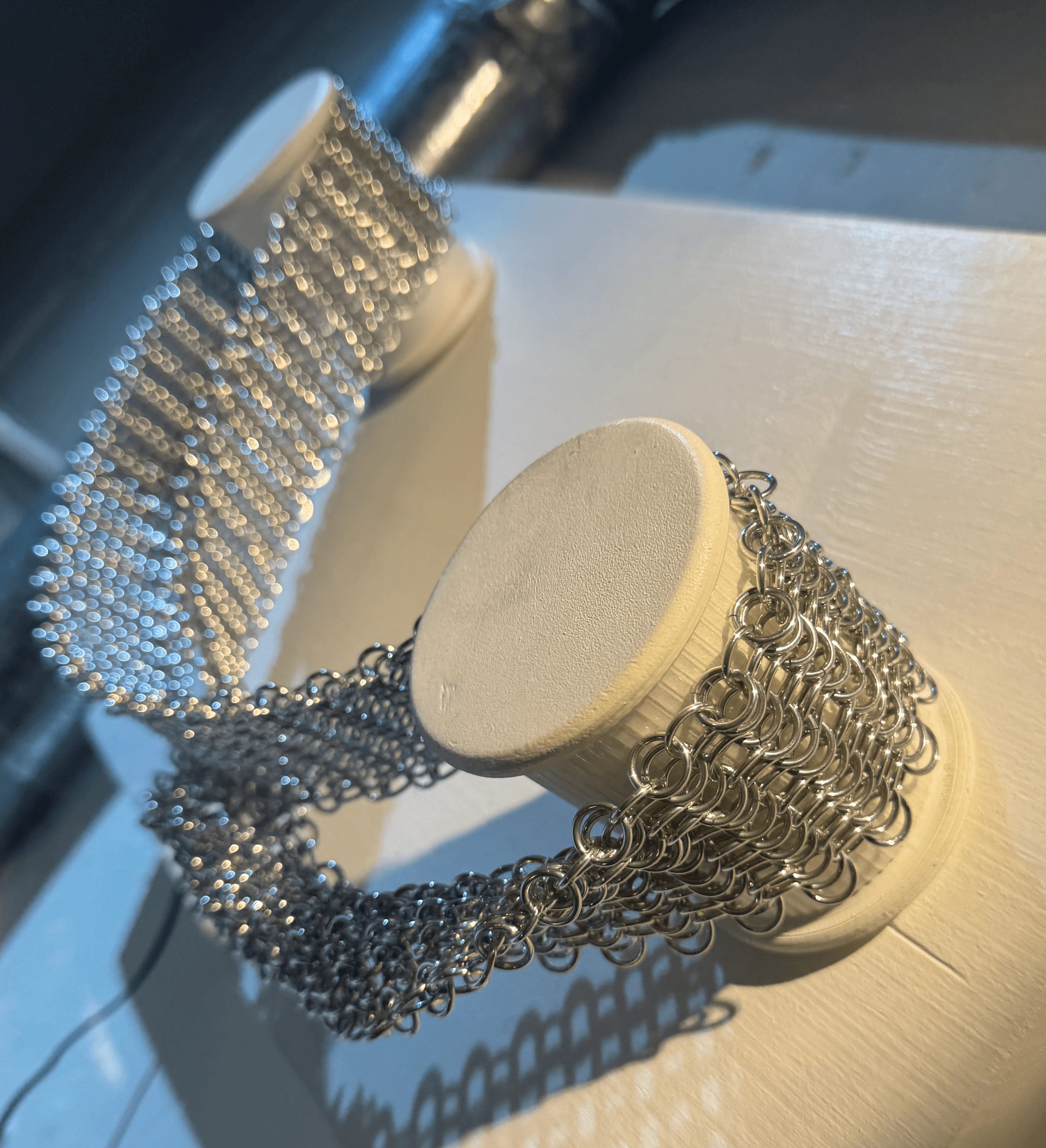
European 4-in-1 chainmail displayed as a rotating belt on electronic motors, supported on wooden frame.
triangle scale-mail
Demonstrate human-chainmail interaction.
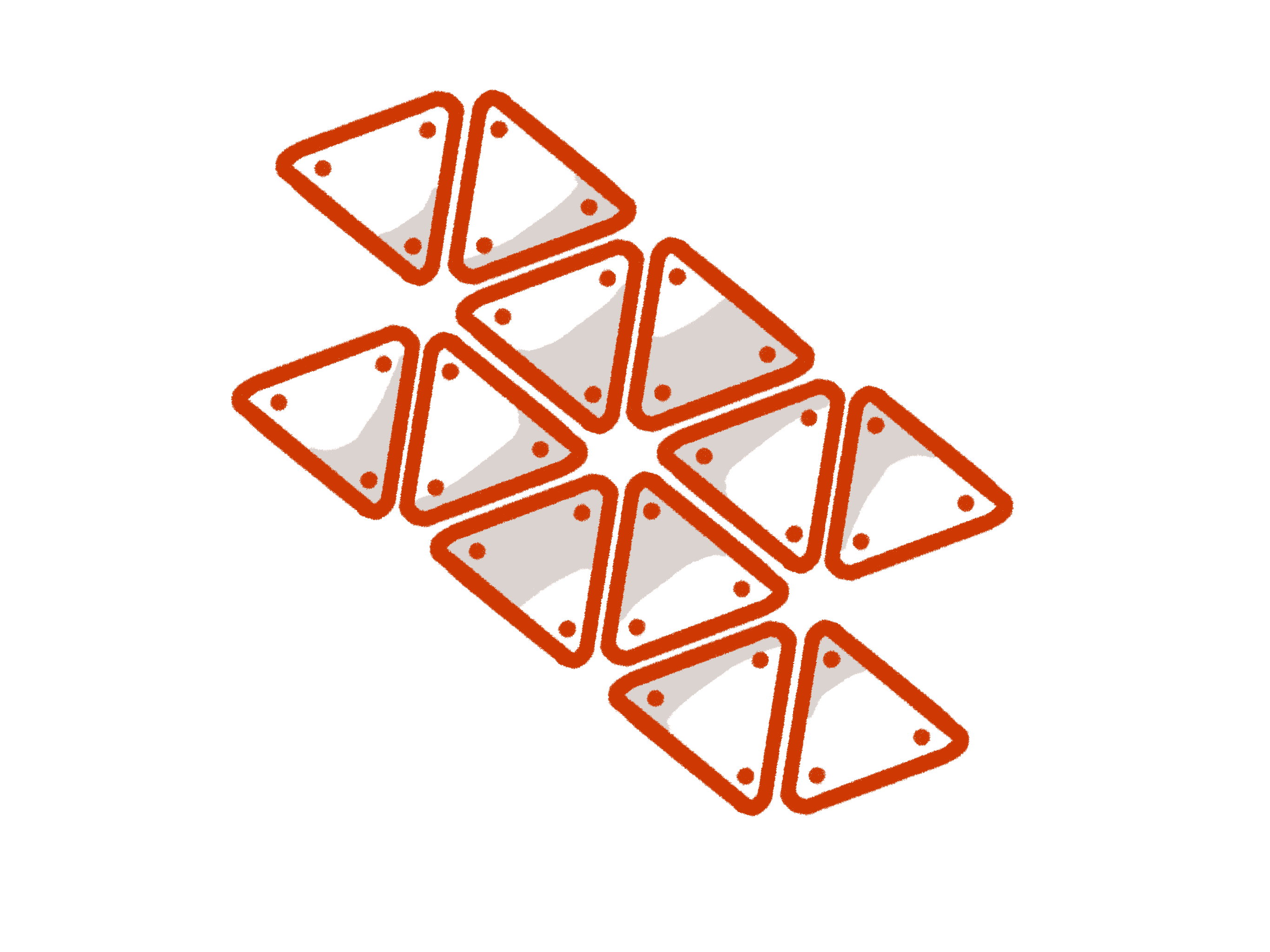
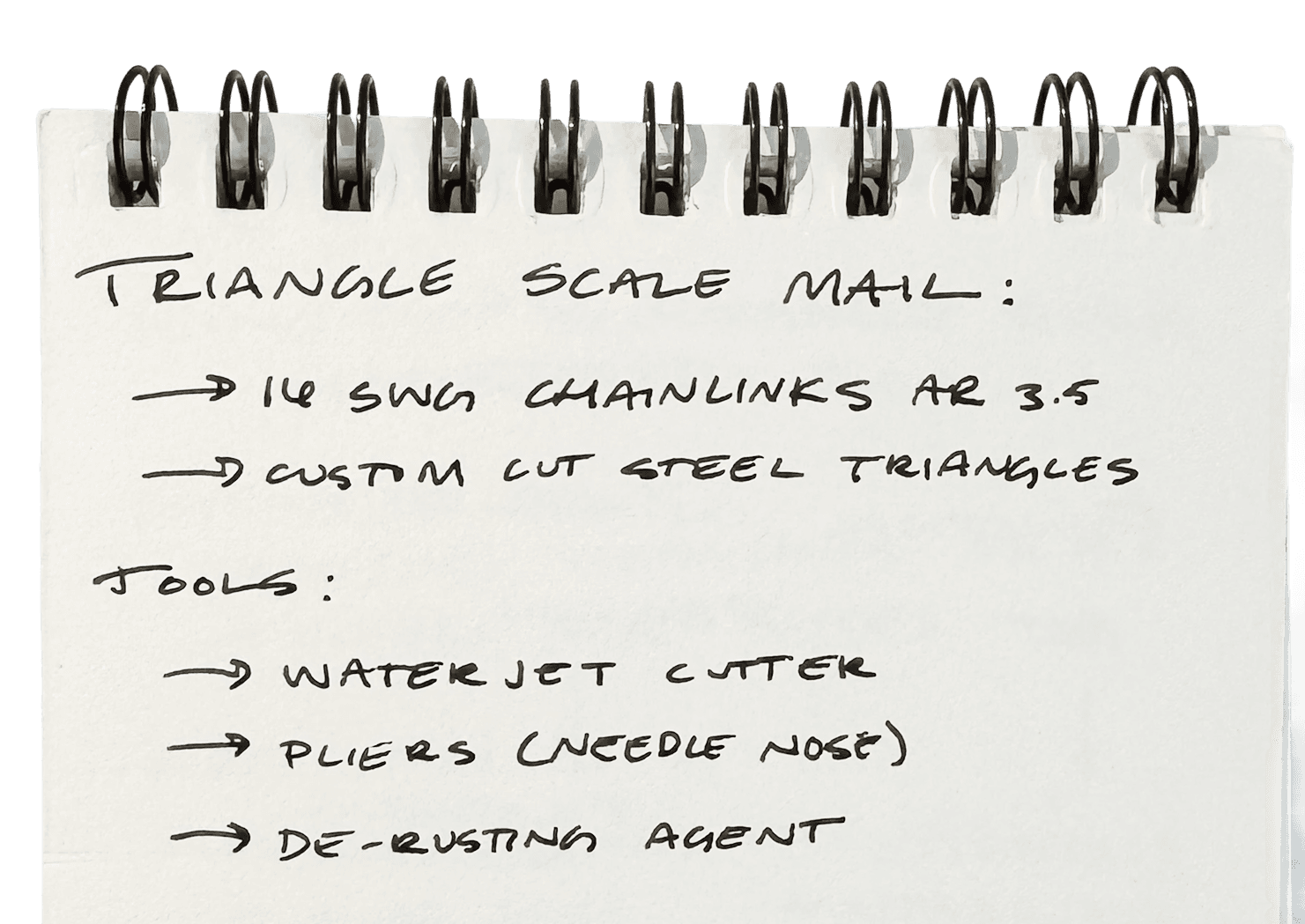
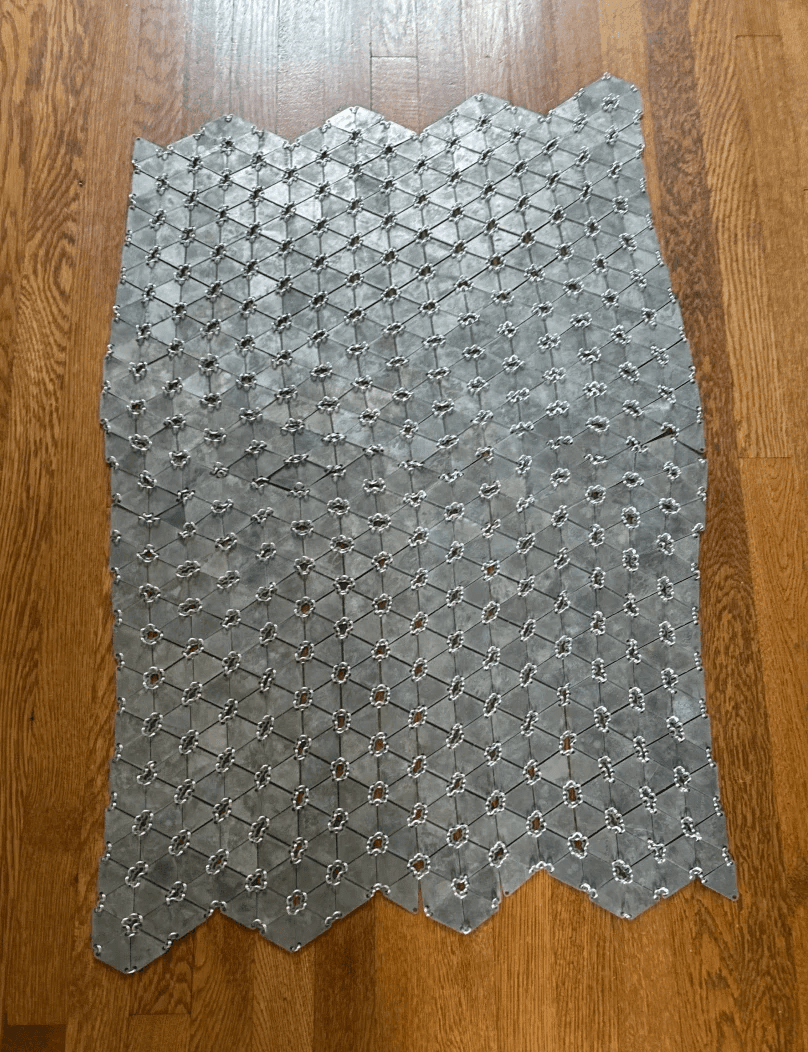
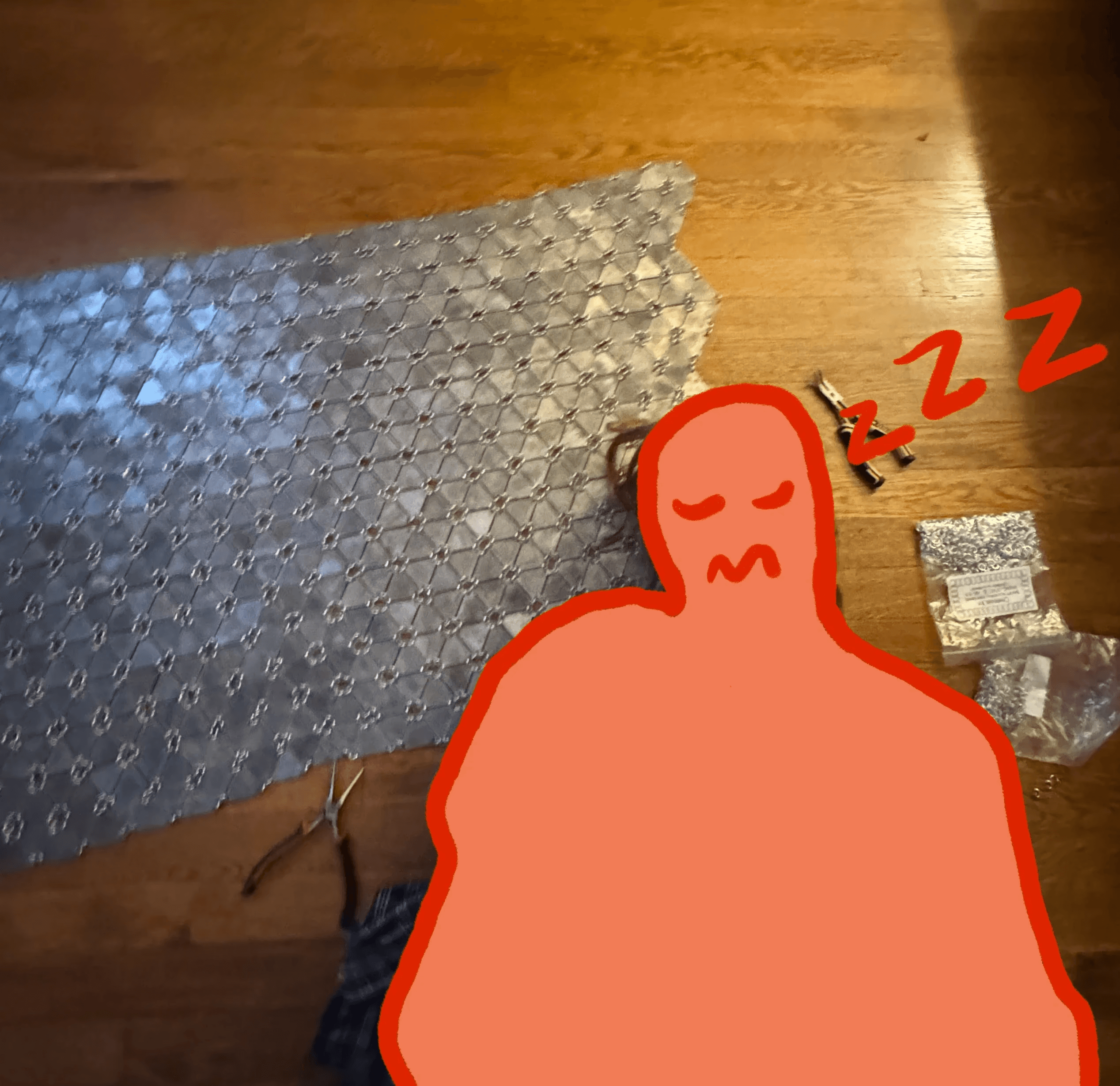
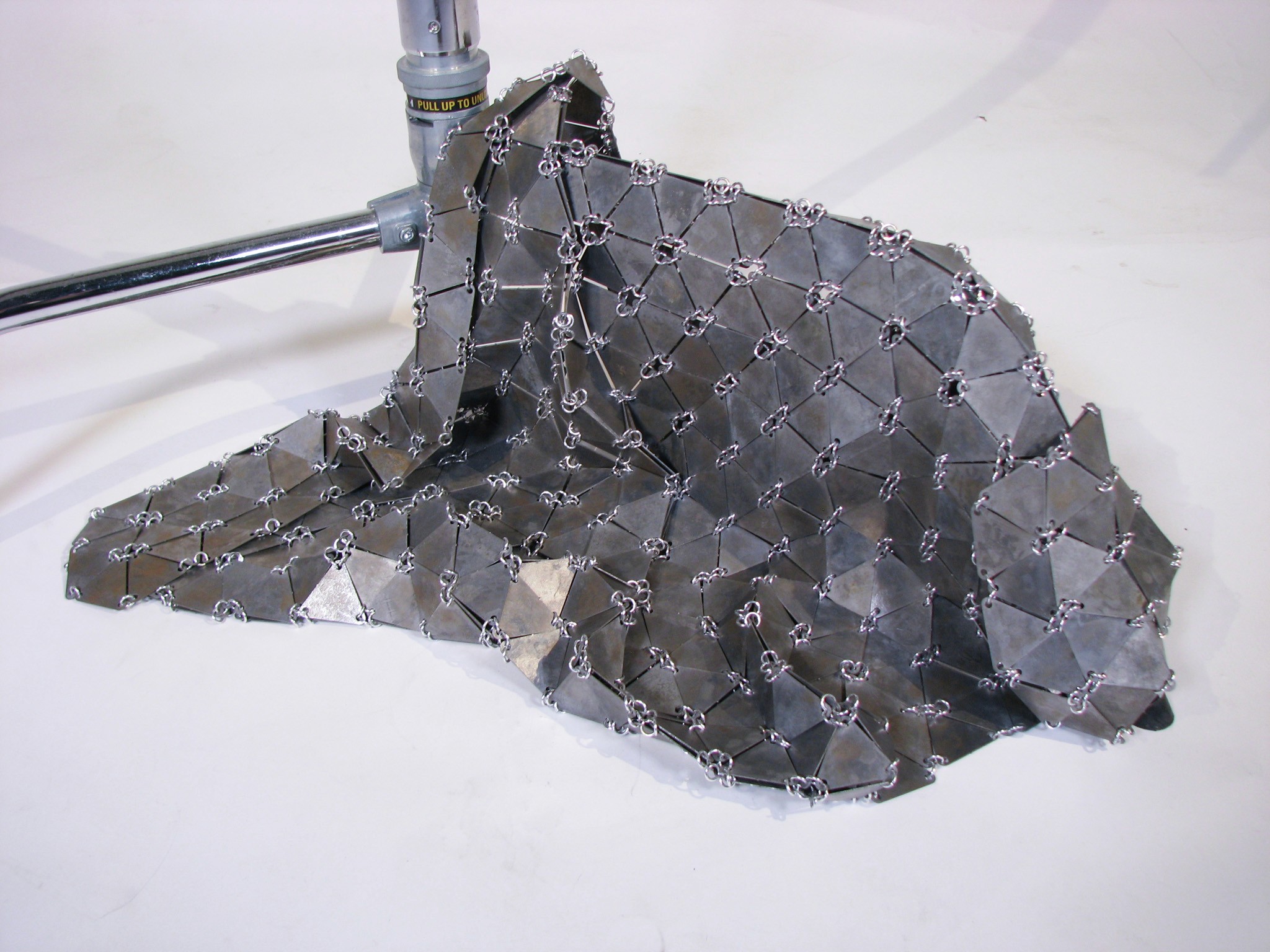
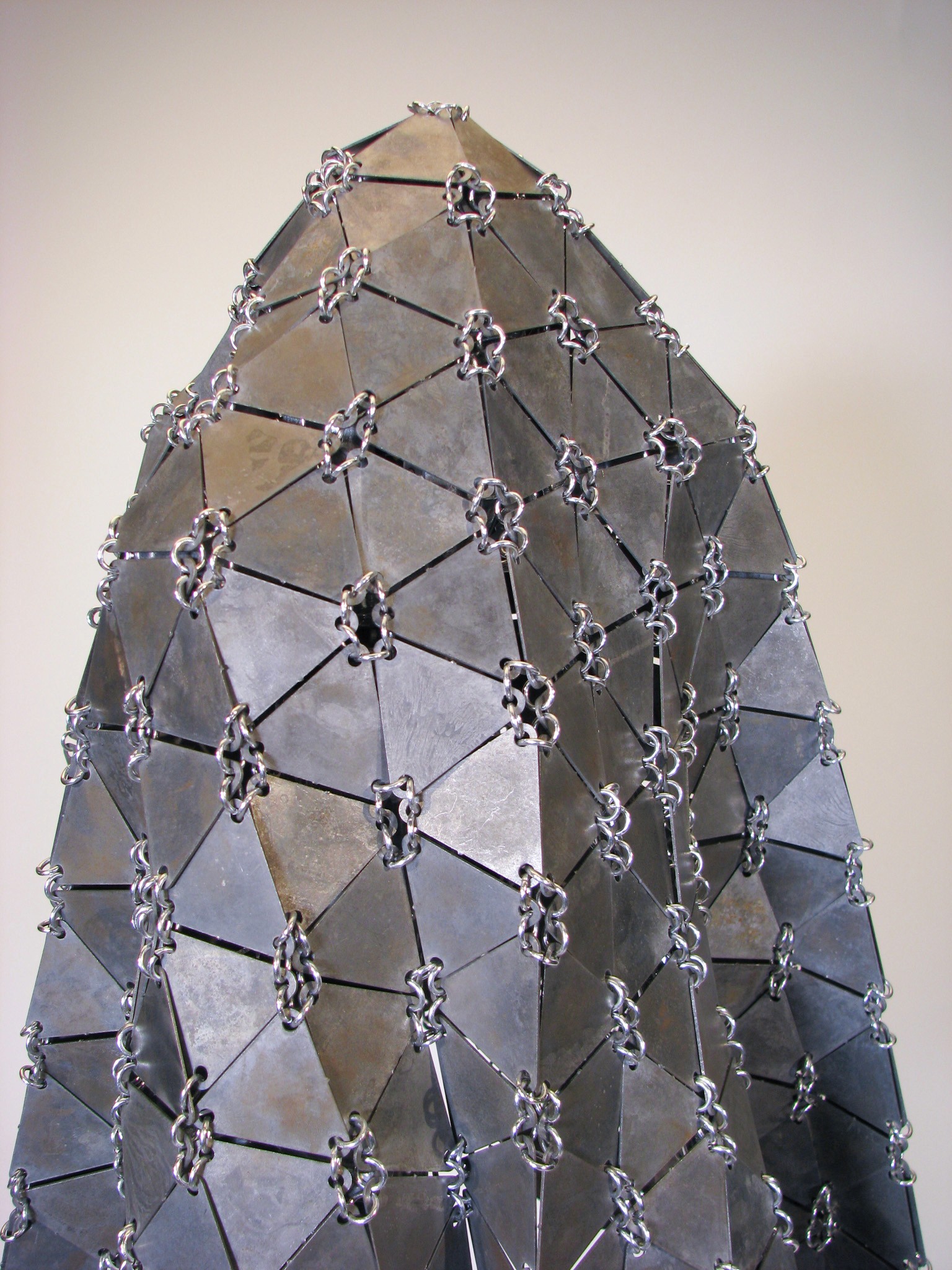
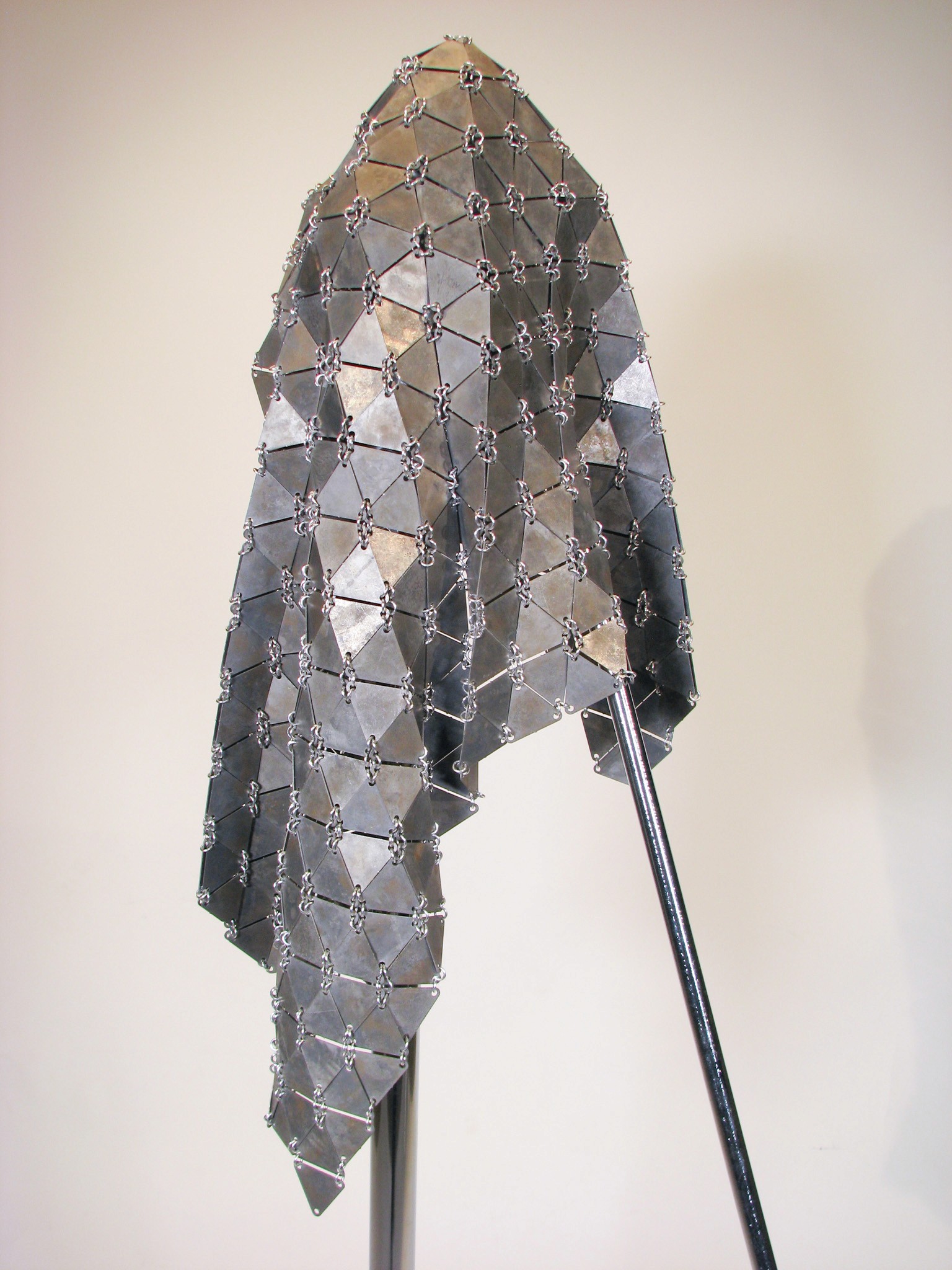
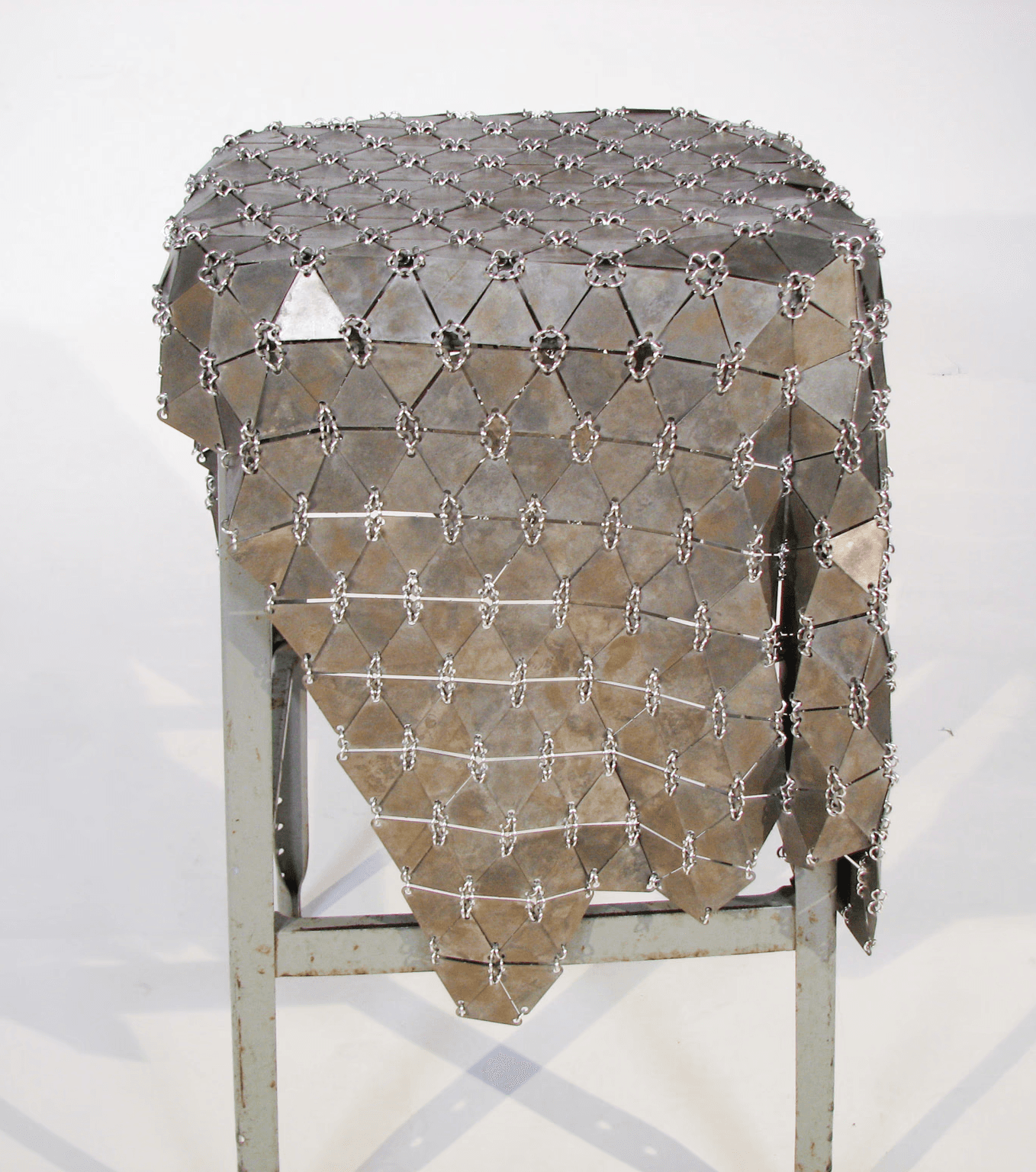
3.5 feet by 2 feet sheet of triangle scale-mail made of water-jet cut 20 gauge steel triangles and aluminum jump rings.
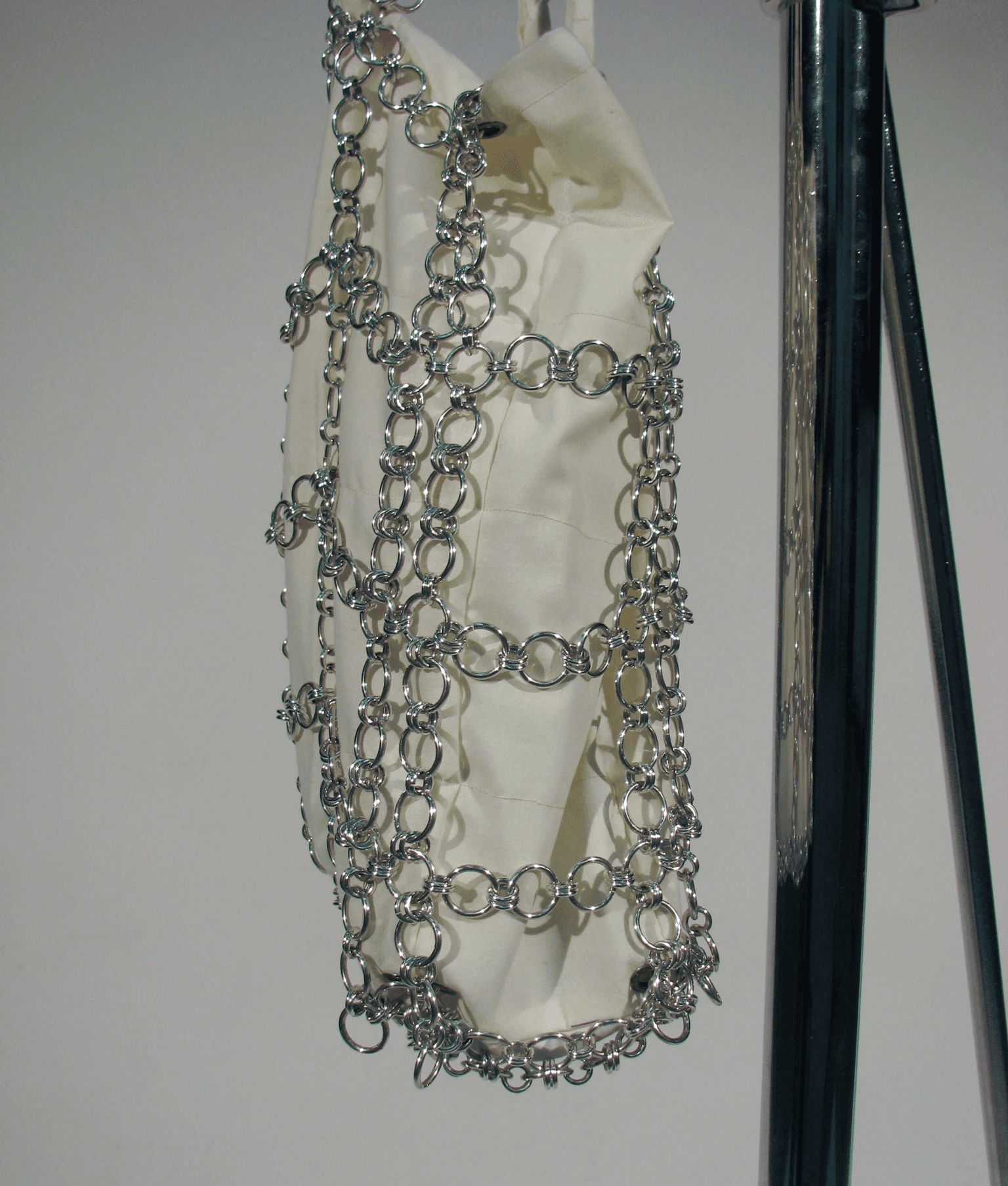
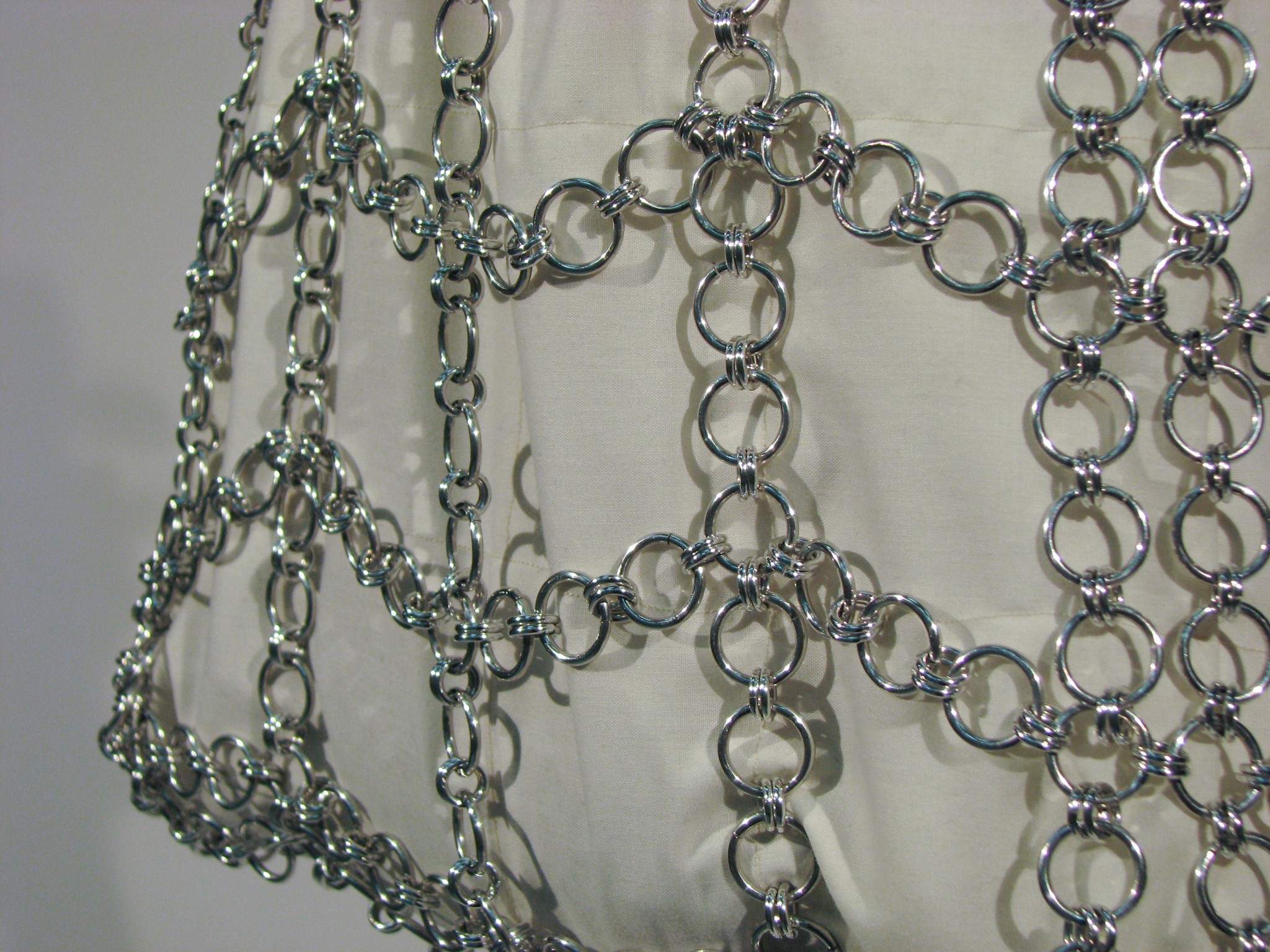
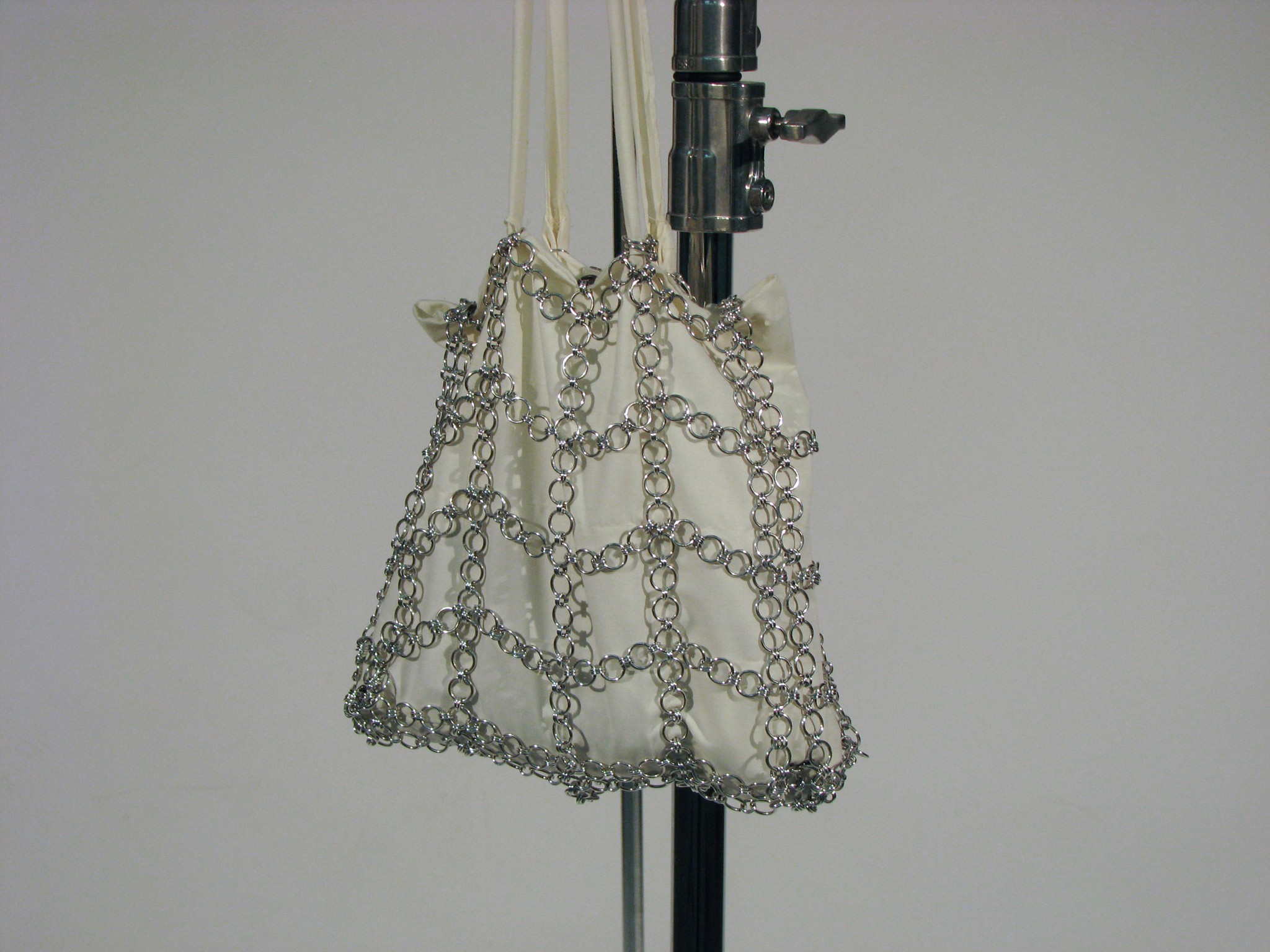
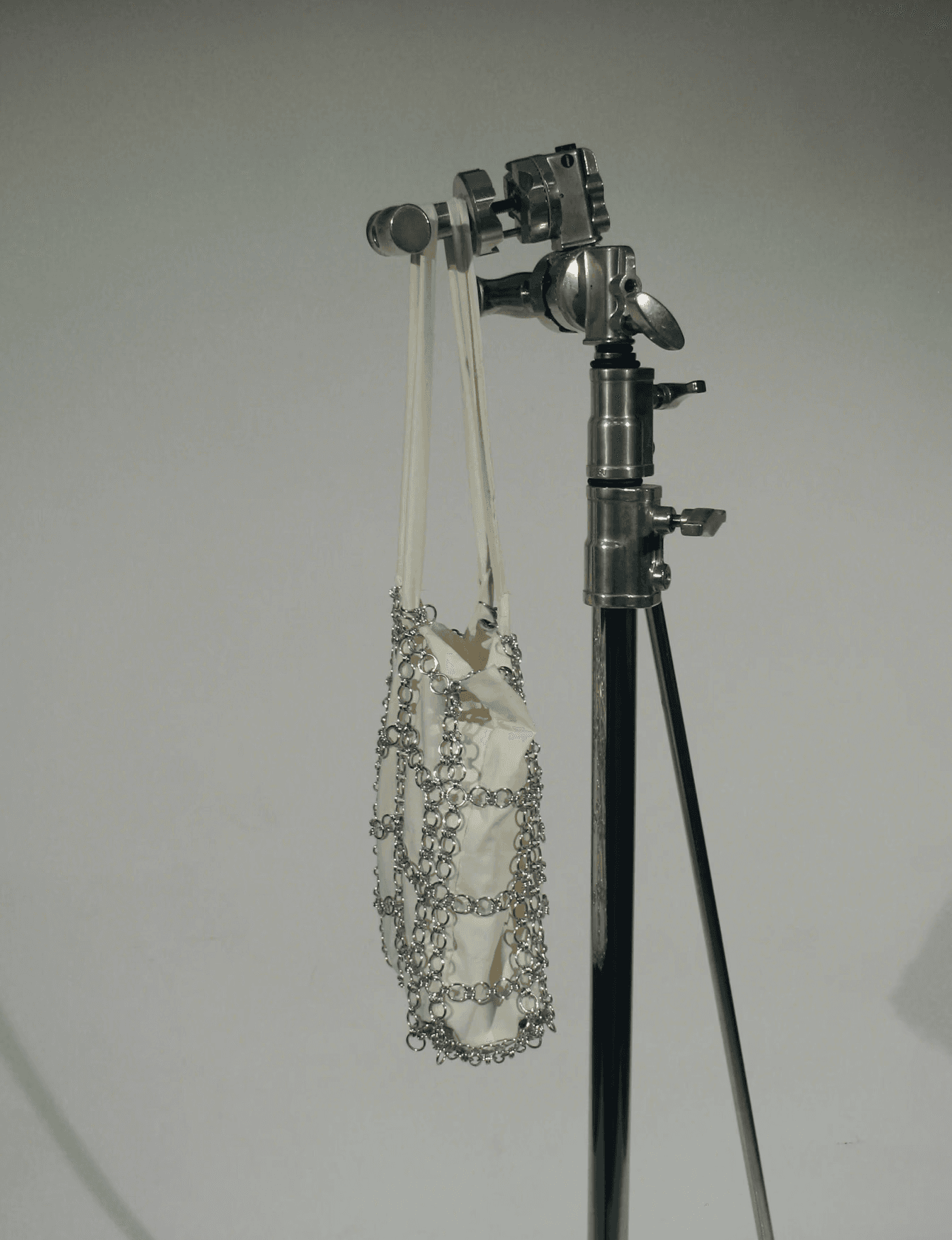
tote bag
Demonstrate chainmail in functional products.
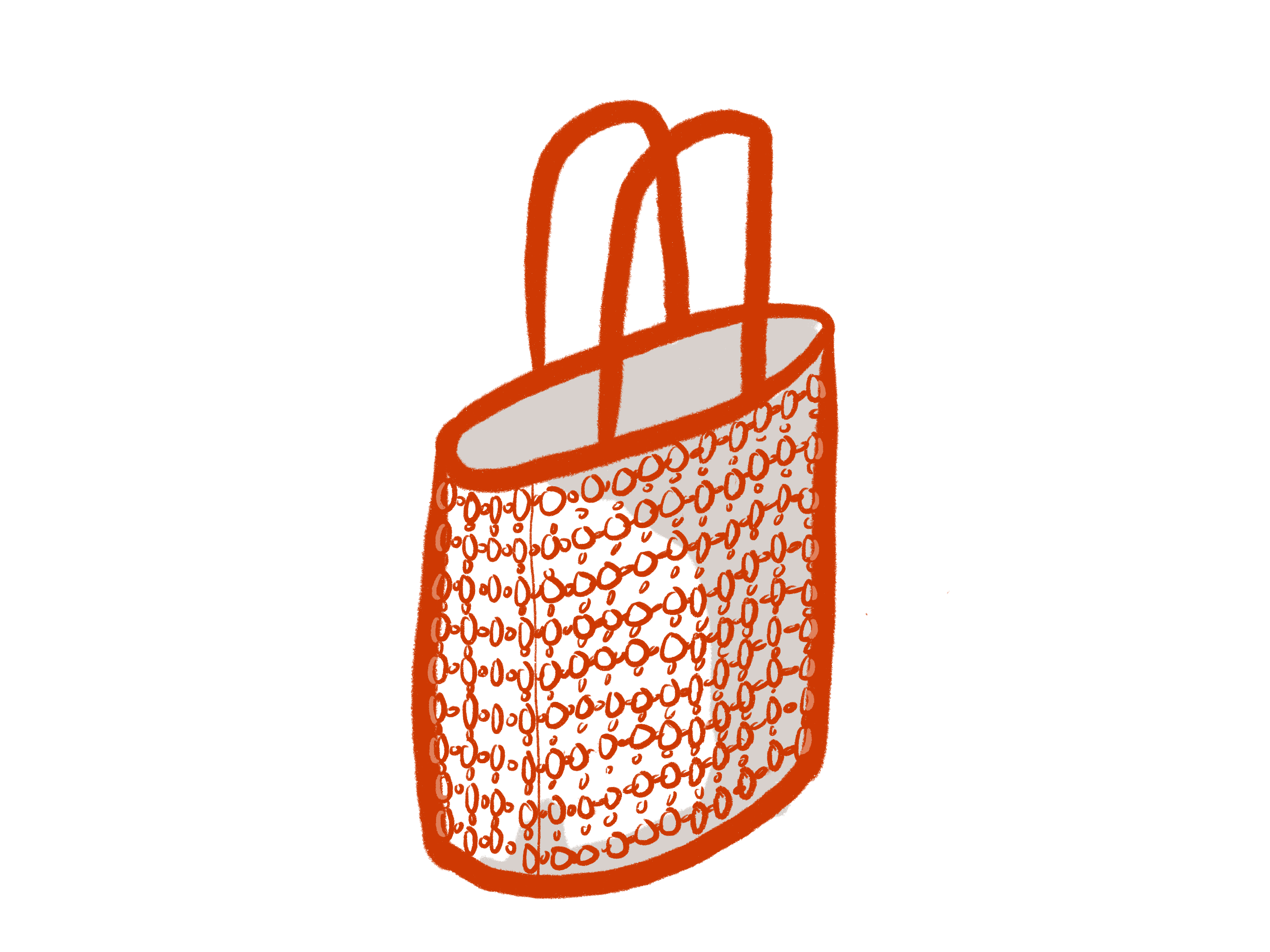
Usable tote bag made with recycled fabric as an inner lining and Japanese 4-in-1 inspired chainmail weave as the outer shell.
Kinetic Sculpture
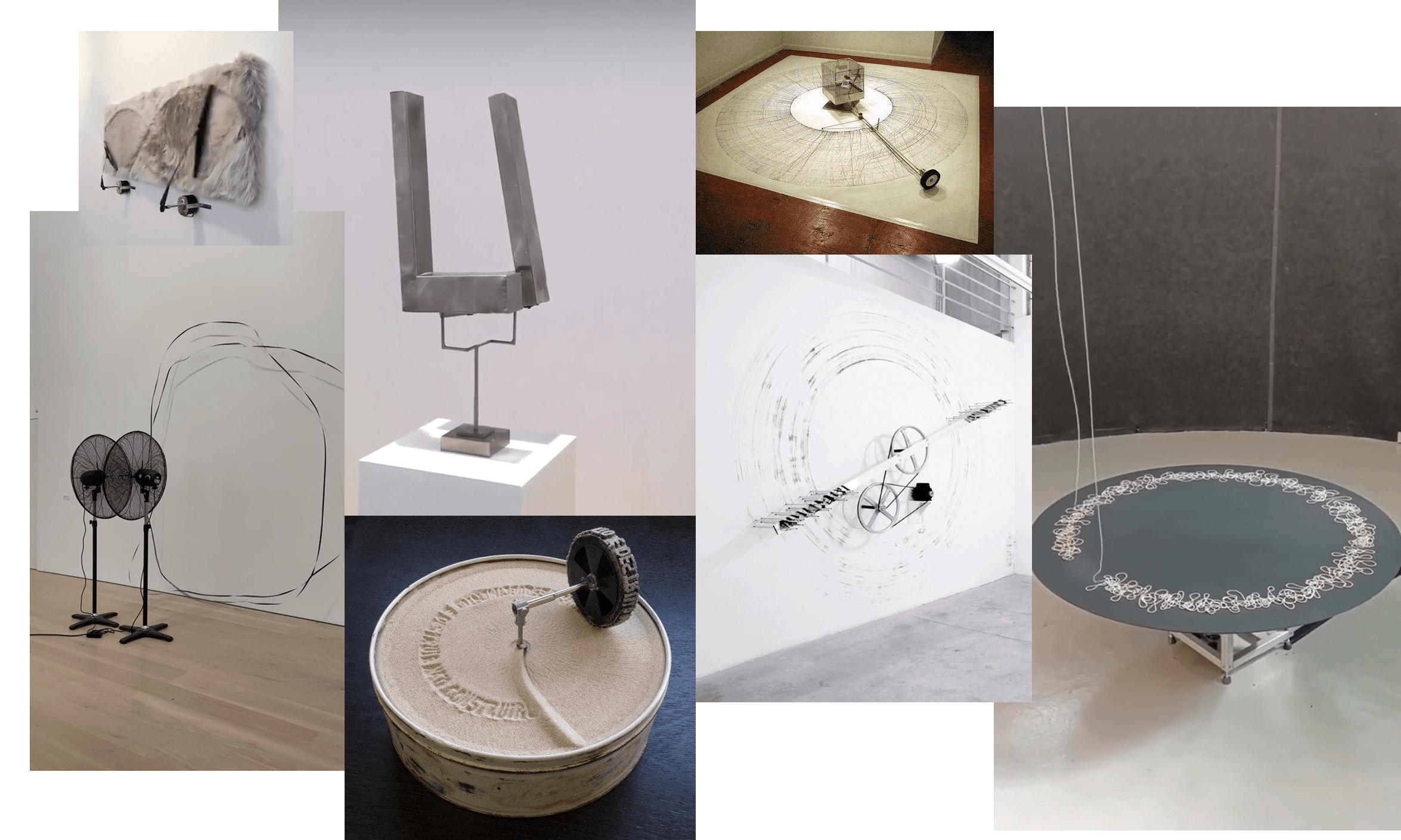
Pairing hand-made chainmail with modern electronics, this piece attempts to bring a historic making technique into a contemporary context. As a powered kinetic wall sculpture, it does not serve a practical purpose, but exists to create moments of subtle awe and curiosity, inviting viewers to pause, watch, and engage with motion as an experience.
Making Process
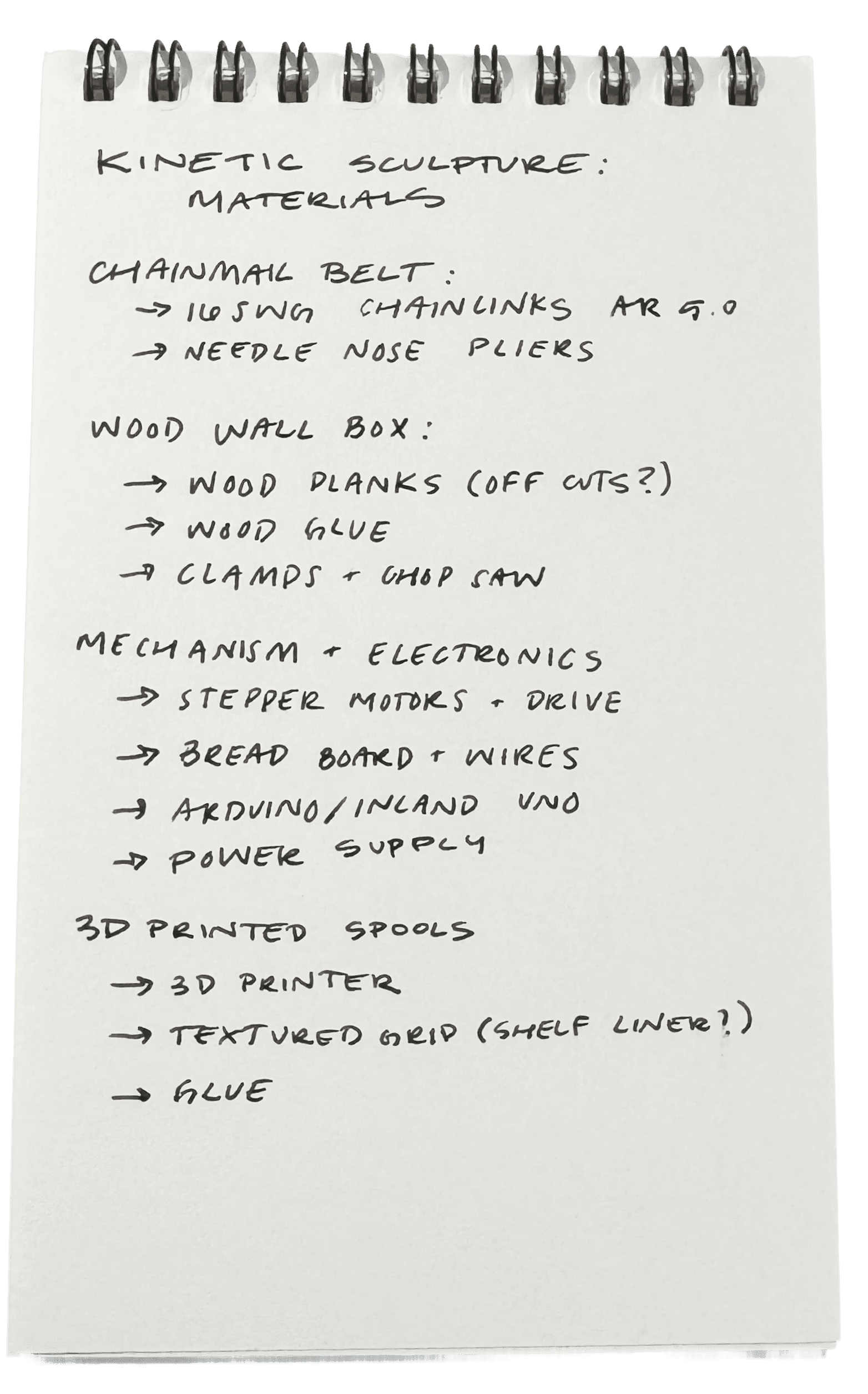
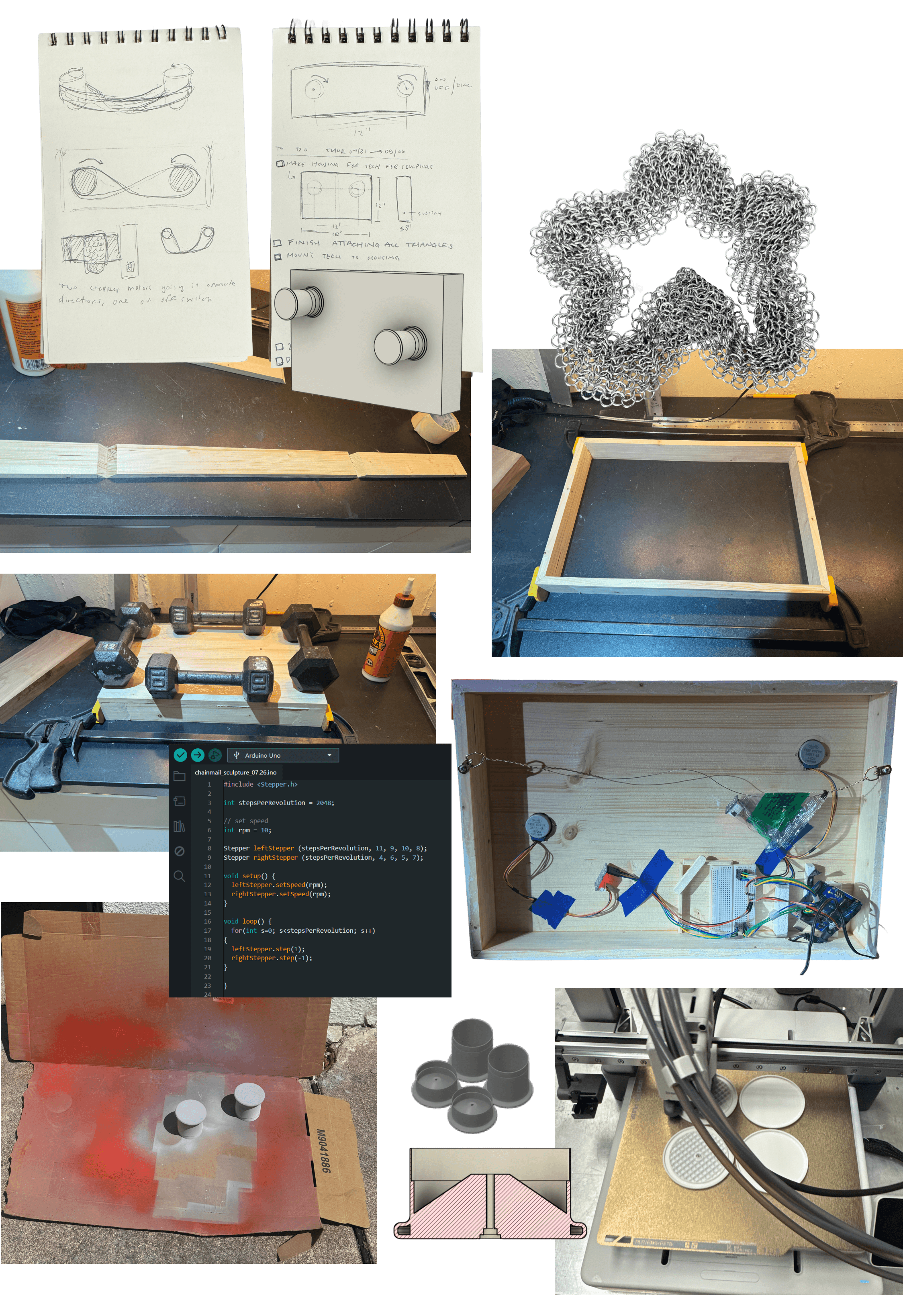
Steps to create a cohesive wall mounted kinetic sculpture powered by stepper motors and an arduino board:
Chainmail:
Create 4'x3" long chainmail belt using 4-in-1 European chainmail weave.
Spools
Design and 3D print hollow spools (with stepper motor fit attachment).
Plan location placement of spools and movement of chainmail belt.
Prep, paint and line spools with textured material for friction with chainmail.
Wood Wall Box
Build wooden box to mount electronics and spools on, plan for wire routing and power source
Prep and paint box white for clean background and contrast.
Electronics & Mechanisms
Wire stepper motor circuit and code stepper motors' movement to have continuous rotation towards each other.
Placement and Mounting
Scale Mail Blanket
Explored at a larger scale, the intricacy of this chainmail piece emerges through repetition, with each closed jump ring embodying time and labor. When handled, the piece responds with shifting reflections, sound, and different forms, allowing material presence and scale to define the experience.
Making Process
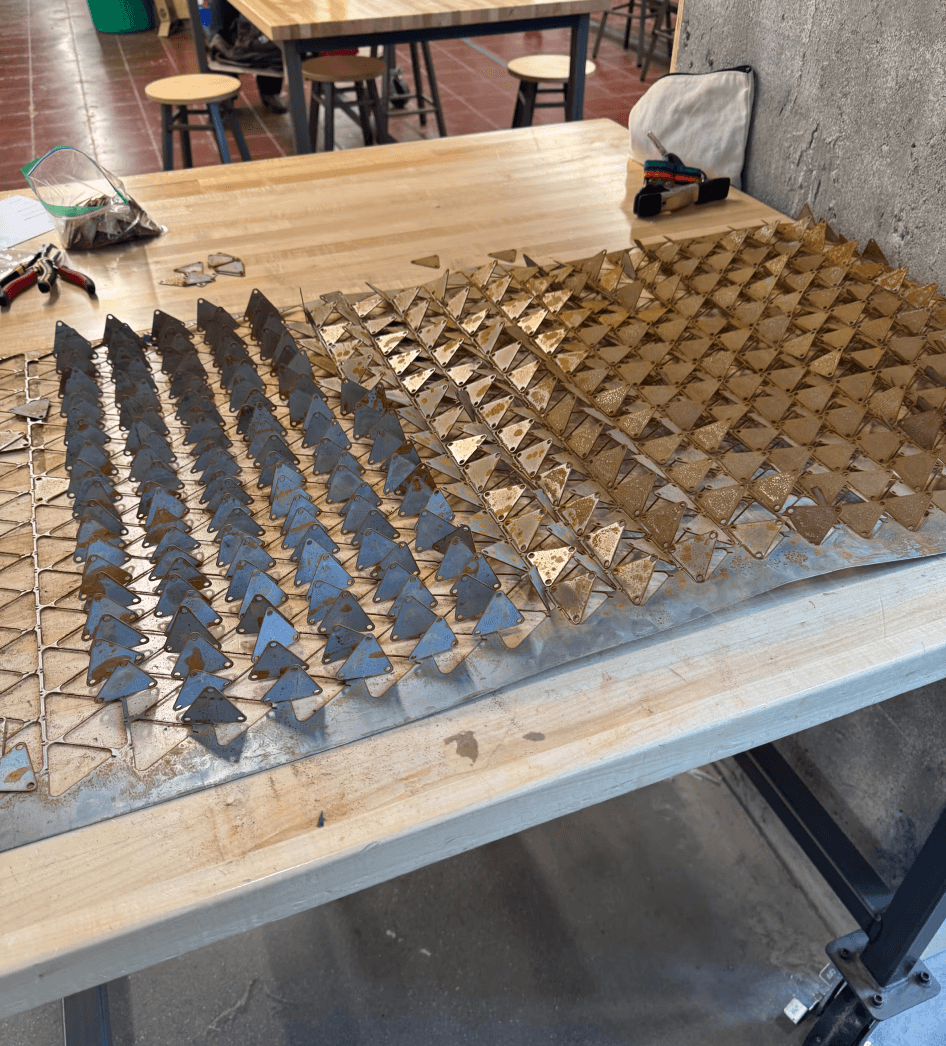
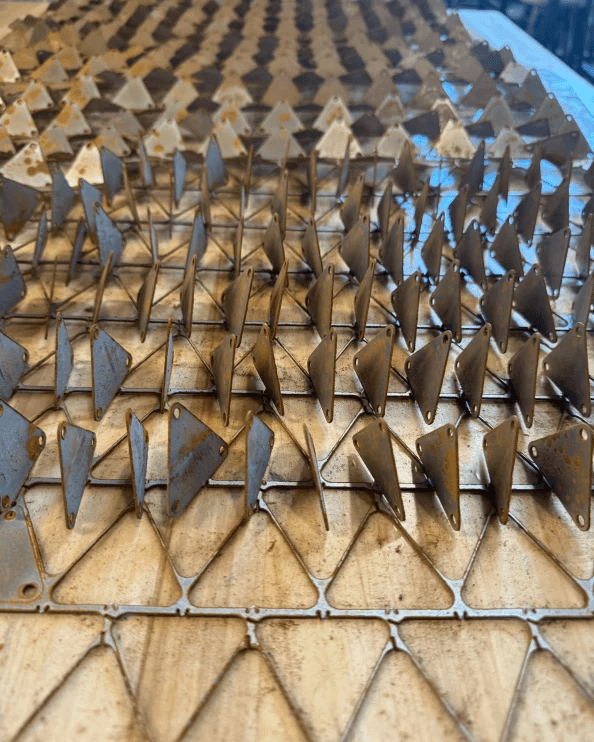
Steps to create a large steel triangle scale-mail sheet:
Triangle Pieces:
Create a waterjet cut file in illustrator to send to 1819, include rounded corners and attachment holes.
Take each triangle piece off of steel, sand down the rust and then apply de-rusting agent in ziploc bag batches.
Assembly:
Hand connect each triangles to each other using aluminum jump rings and pliers, two jump rings per triangle hole.
Tote Bag
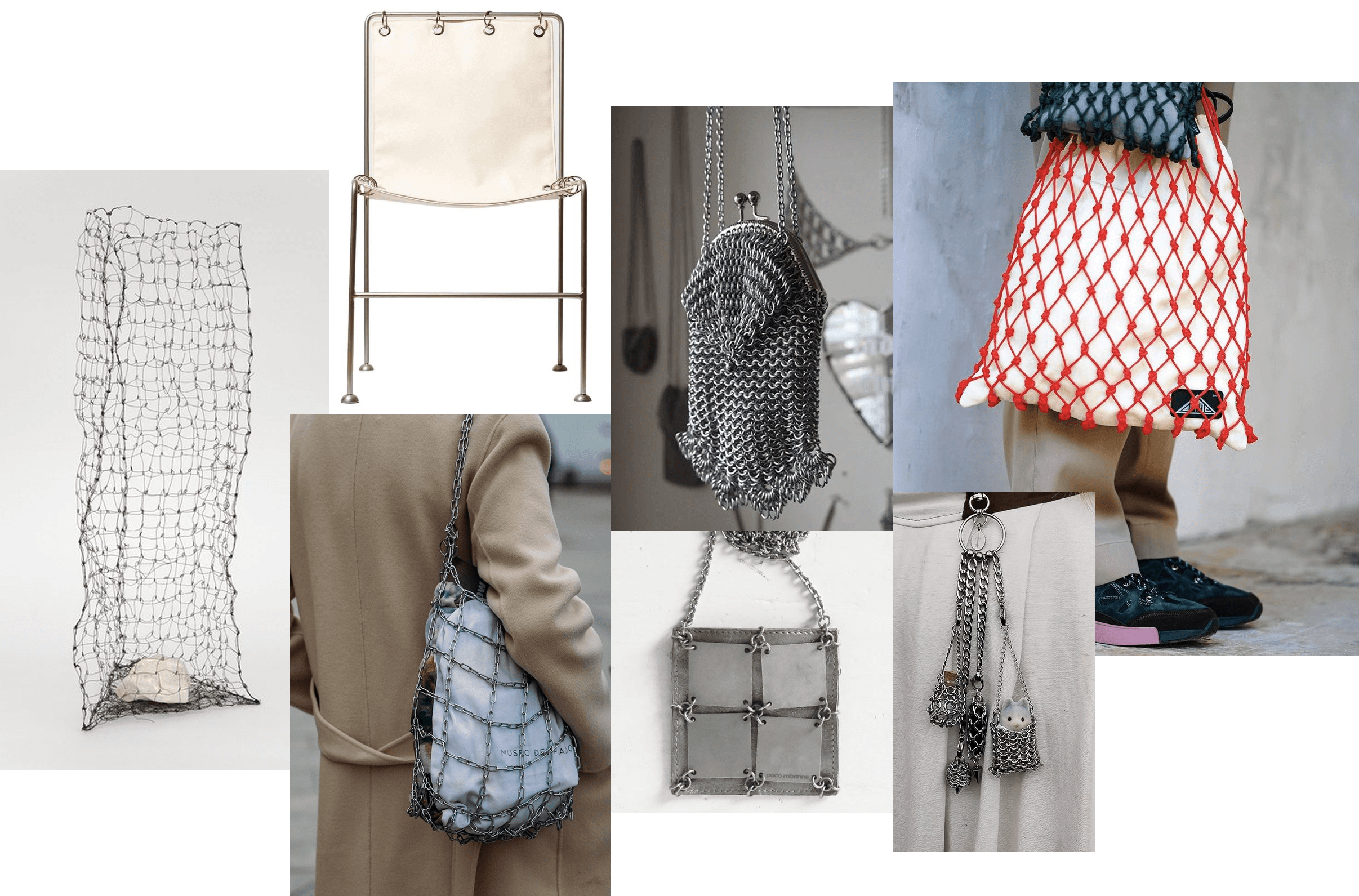
This tote reimagines chainmail as both decorative and functional, combining a fabric lining with an aluminum outer shell. The chainmail adds weight, personality, and protection, preventing the fabric from contacting the ground. The piece reframes chainmail as a contemporary, expressive material that balances utility with hand made decoration.
Making Process
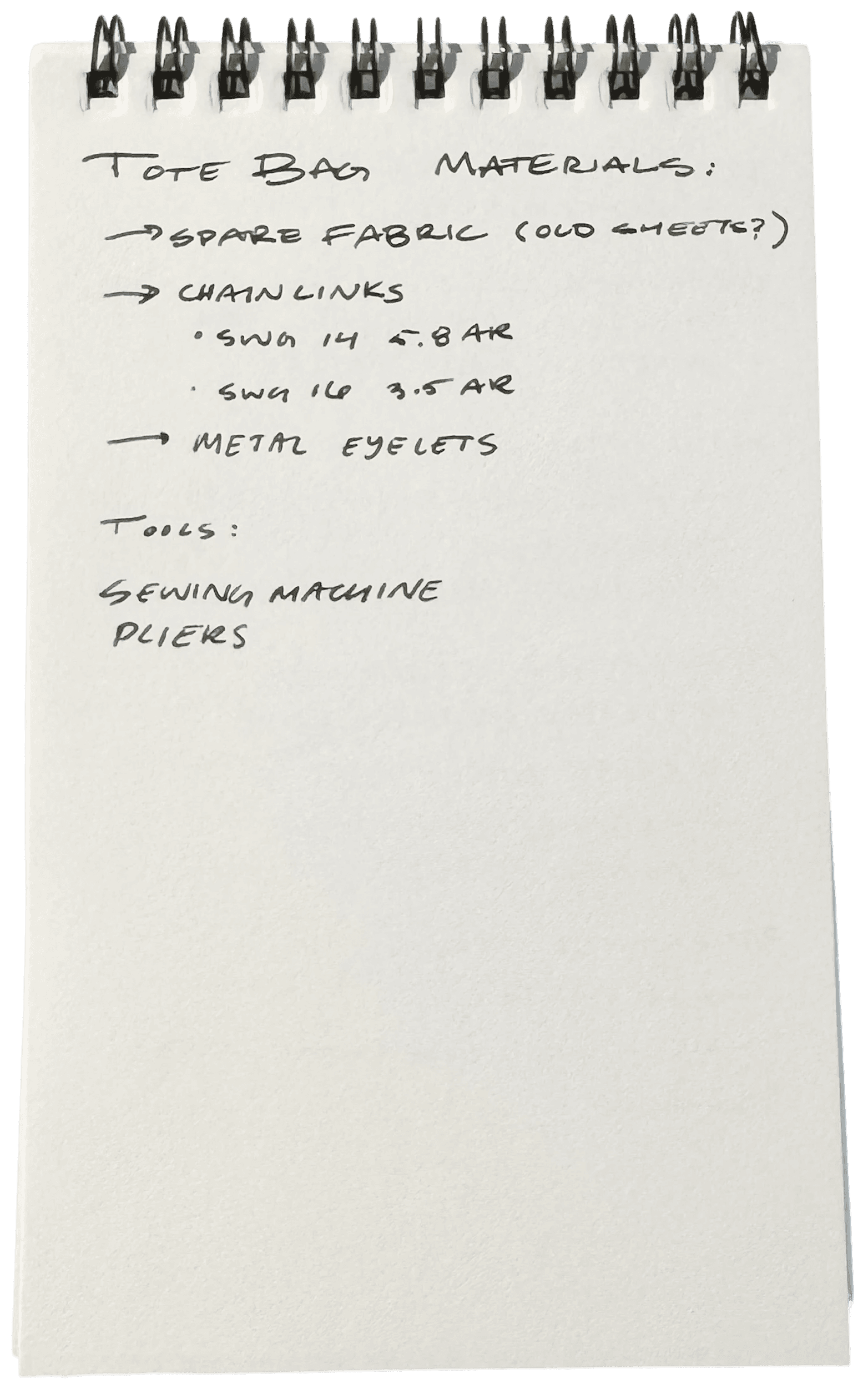
Steps to create a functional 2 layer chainmail tote bag :
Chainmail:
Create two 12x12" sheets made of altered 5x5 Japanese 4-in-1 chain squares. 12x12" sheets should look like 4x4 grids.
Create three 3.5x12" rectangles for the sides and bottom of the bag, these should look like 1x4 grids.
Attach sheets together with smaller chain links forming the outer shell of the bag.
Fabric Lining:
Cut fabric into four squares 13x13", six rectangles 5x13", and two long rectangles 2x25".
Cut a 4x13" rectangle of canvas.
Take two square layers and quilt together using 4x4 grid, repeat with remaining square cuts. Take two rectangle layers and the canvas, quilt together making 4 sections, a 1x4 grid.
Quilt the remaining rectangles together in pairs of two.
Sew two long 2x25" rectangles into bag straps.
Construct tote bag, then attach bag straps.
Apply eyelets to corners of square and side panels.
Link the chainmail shell through each of the eyelets.

Final Pieces
Kinetic Sculpture
Scale Mail Blanket
Tote Bag